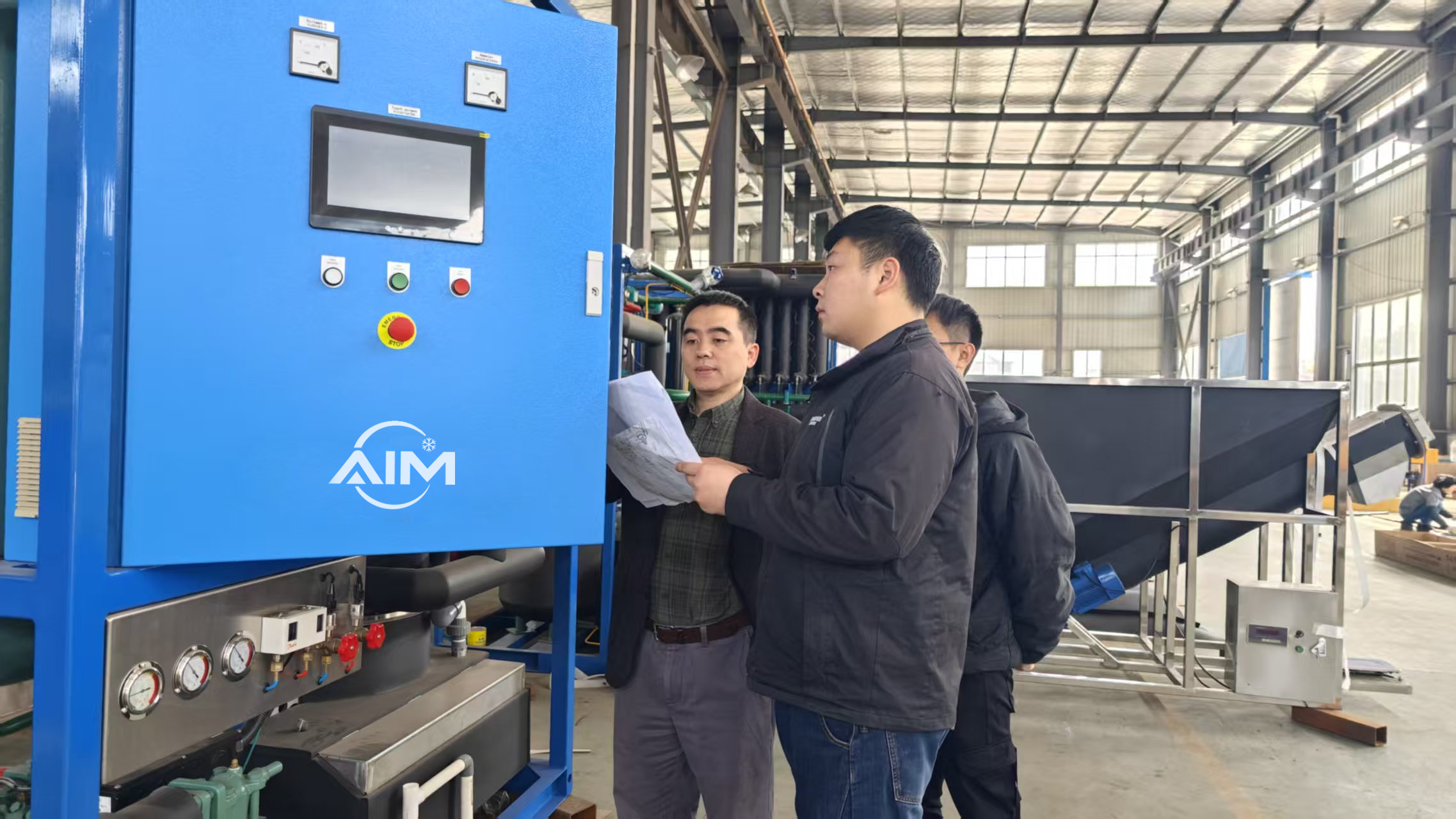
Selecting a block ice machine for an ice-factory project that needs the block-making area coordinated with water, power and practical mold handling begins with a written operating brief. The product page is a useful starting point, but it cannot replace the site, workflow and utilities information that determines how the equipment must fit the project. Buyers who prepare that information can ask AIM Refrigeration to discuss a configuration based on the real application instead of a generic equipment label.
This block ice machine utility and mold handling brief is a procurement document, not a performance promise. It gives the buyer a consistent way to record verified inputs, flag unknown conditions and ask for a proposal that identifies its assumptions before equipment, site works or operating responsibilities are finalized.
This guide focuses on the planning questions behind a block ice machine inquiry. It does not substitute for final engineering or site review. Its purpose is to help the buyer describe the required workflow, identify interfaces early and compare quotations on the same basis.
Define the operating duty first
Describe the intended block-ice application, production rhythm, working hours and the expected handling path after release. The block ice machine page should be used to frame the product discussion, while the buyer documents the actual ice-factory duty and the periods that create peak handling work.
Write these inputs in a short project sheet and identify which values are measured, estimated or still to be confirmed. That distinction is valuable during quotation review. It allows the supplier to ask targeted follow-up questions and prevents a preliminary assumption from being treated as a final site condition.
Choose the scope around the workflow
Set the supply boundary
Identify the proposed machine, mold, release, storage, crushing or dispatch boundary. A useful inquiry explains whether blocks are kept whole, transferred to a crusher or moved into another delivery arrangement, so quotations are compared on the same operating route.
Keep operating responsibility visible
Equipment selection is stronger when the buyer identifies who will operate, clean and maintain each part of the system. Include shift pattern, training responsibility, access restrictions and the normal response when production changes. These details do not determine a product specification by themselves, but they make it possible to review the proposed arrangement against the people and process that will use it.
Plan the site and connected systems
Provide a plan of the water supply, ice-making area, mold handling route, release area, drainage, storage, lifting or trolley access, electrical supply and service clearance. Mark wet areas and the route used by people and product-handling equipment.
State water condition, local voltage, ambient environment, cleaning access and who supplies supporting works such as drains, power connections, lifting or downstream equipment. These are project inputs, not guarantees about final equipment performance.
Use the relevant AIM project information alongside the product discussion when it helps the team visualize system connections. For this application, the related AIM page is available here. The final arrangement should still be confirmed against the project drawings, utility information and the supplier’s documented scope.
Prepare a quotation-ready inquiry
A practical inquiry should give every bidder the same decision inputs. It is better to acknowledge an unknown item than to fill it with an assumed number. That approach lets AIM identify the information required for a final selection and keeps early comparisons transparent.
- Application description and operating workflow
- Required output, batch or throughput pattern
- Product, material or visitor-flow data relevant to the application
- Daily operating hours, peak periods and future expansion plans
- Site location, voltage, frequency and available utilities
- Layout drawing, equipment space and service access
- Existing equipment and connection-point information
- Drainage, ventilation, water and electrical constraints
- Scope expected from the supplier and scope retained by the buyer
- Installation sequence, documentation needs and decision timeline
Questions to settle during project review
Confirm the conditions behind the request
Before treating a preliminary proposal as a final selection, the buyer should review the conditions that may change between concept design and installation. Check whether the stated workload, room or process layout, incoming utilities and surrounding equipment are still current. Confirm that the equipment can be delivered to, placed in and serviced from the intended location. Where a drawing is preliminary, identify the dimensions or routing decisions that need confirmation before final equipment details are agreed.
Record the interfaces in writing
A useful proposal review separates AIM’s supply from work performed by the owner, contractor or another equipment provider. Record the expected connection points for water, drainage, power, controls, refrigerant-related works where applicable, structural preparation and access. Also identify who supplies supporting items such as piping, foundations, ventilation, insulation, lifting and commissioning coordination. This is not extra paperwork for its own sake; it gives the project team a shared list of decisions that can otherwise be missed between procurement and installation.
Finally, make room for change control. If capacity, product format, operating hours or site layout may change, note the decision date and share updates before equipment is released for final engineering. That process keeps the block ice machine inquiry tied to the project actually being built and gives all parties a clearer basis for reviewing scope, timing and responsibilities.
Review the proposal before ordering
Compare scopes against the same utility information and block-handling path. Confirm machine, molds, release or crushing interfaces, site work and commissioning responsibilities before final selection.
Send the project brief through the AIM contact page with drawings, photographs and utility information where available. A complete inquiry gives the engineering discussion a clear starting point and helps the buyer evaluate the proposed block ice machine against the operating conditions that matter.
Technical questions buyers ask before choosing Block Ice Machine Utility and Mold Handling Checklist.
These points help overseas buyers compare capacity, condenser type, project data and equipment scope before requesting a quotation from AIM Refrigeration.
What is the difference between brine block ice and direct cooling block ice?
Brine systems are often lower in initial cost and familiar for traditional block ice plants. Direct cooling systems avoid brine contact, can reduce manual handling and are often selected for cleaner operation and easier ice harvest.
How long does it take to freeze one batch of block ice?
Freezing time depends on block weight, water temperature, evaporating temperature, condenser performance and ambient climate. A technical quotation should be based on the required block size and daily production schedule.
Which condenser type is best for tropical block ice projects?
Water-cooled or evaporative-cooled condensers are often reviewed for hot climates when water supply and maintenance conditions allow. Air-cooled systems may be preferred where water is limited.