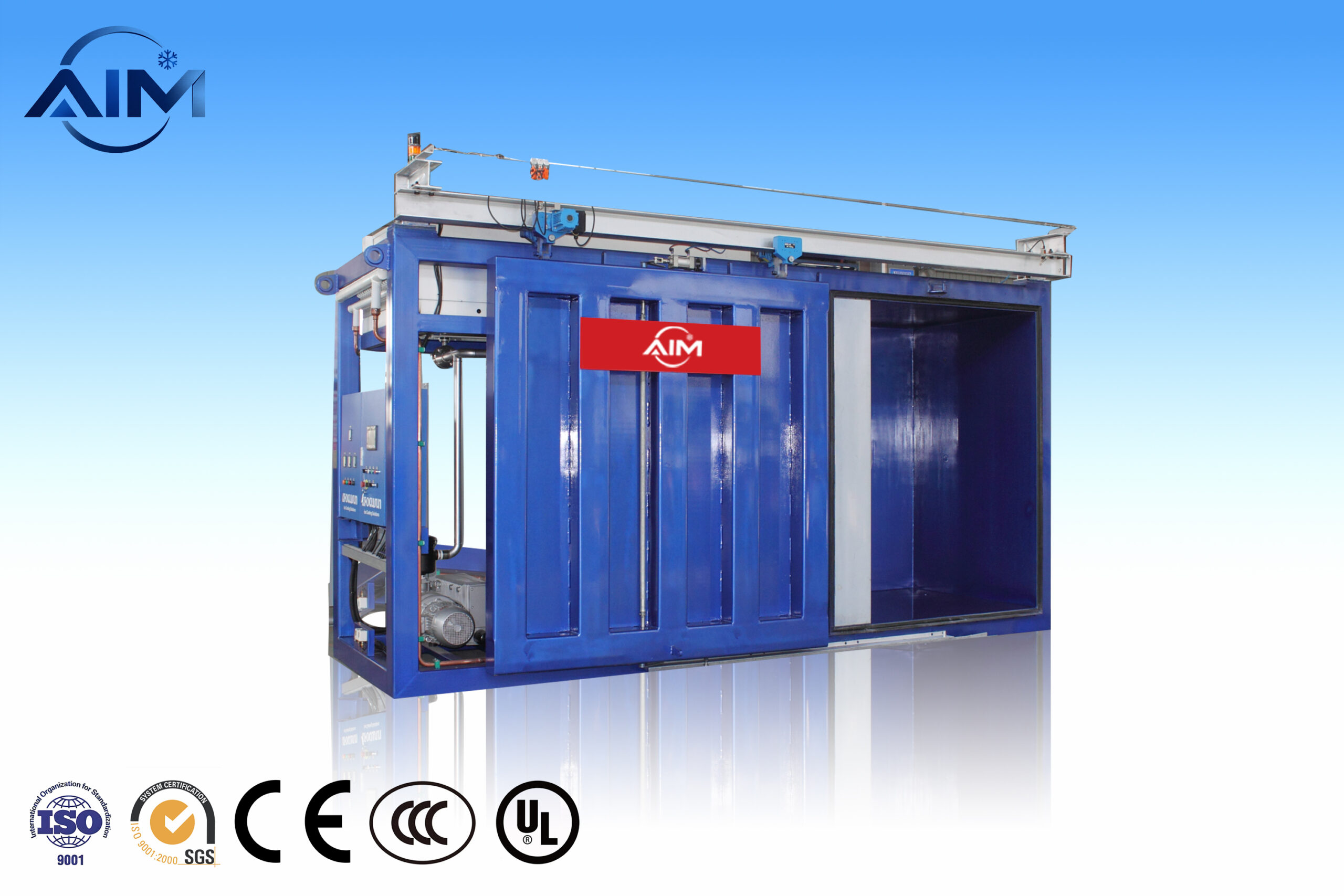
AIM vacuum coolers are built for rapid pre-cooling of vegetables, flowers, mushrooms, cooked food and bakery products before cold storage or refrigerated transport.
Vacuum Coolers for Fresh Product Pre-Cooling
Vacuum cooling removes heat by reducing the pressure inside a sealed chamber, allowing moisture on the product surface to evaporate and carry heat away quickly. For products with a large surface area and natural moisture, this method can shorten cooling time dramatically compared with conventional cold-room cooling.
For farms, packing houses, flower growers, bakeries and prepared-food factories, faster pre-cooling helps stabilize product temperature earlier in the process. This can reduce field heat, support a smoother packing rhythm, and help protect freshness during storage and export logistics.
Typical Applications
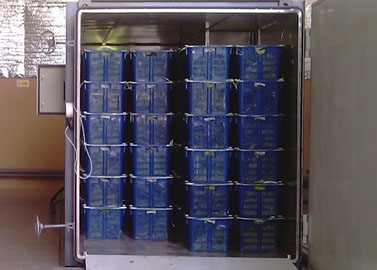
Leafy greens and herbs
Quickly removes field heat after harvest and helps prepare products for packing, cold storage and refrigerated transport.
Cut flowers and seedlings
Rapid temperature pull-down supports freshness control before distribution and export handling.
Bread and baked goods
Controlled cooling can shorten waiting time before slicing, packing or shipment while supporting process efficiency.
Packing and logistics projects
Vacuum cooling can be integrated with cold rooms, loading areas and refrigeration systems for a complete pre-cooling workflow.
Vacuum Cooler Models
AV-01A
Suitable for compact farms, trial batches and small produce rooms. Final chamber size and refrigeration capacity are confirmed according to product type, loading weight and target cooling time.
AV-02A
Suitable for small packing rooms and bakery pre-cooling. Final chamber size and refrigeration capacity are confirmed according to product type, loading weight and target cooling time.
AV-04W
Suitable for produce packing houses with stable utility water. Final chamber size and refrigeration capacity are confirmed according to product type, loading weight and target cooling time.
AV-06W
Suitable for medium production lines and repeated daily batches. Final chamber size and refrigeration capacity are confirmed according to product type, loading weight and target cooling time.
AV-08E
Suitable for larger facilities in warm operating conditions. Final chamber size and refrigeration capacity are confirmed according to product type, loading weight and target cooling time.
AV-10E
Suitable for high-throughput cold-chain and packing operations. Final chamber size and refrigeration capacity are confirmed according to product type, loading weight and target cooling time.
AV-12E
Suitable for large pre-cooling projects with continuous batch demand. Final chamber size and refrigeration capacity are confirmed according to product type, loading weight and target cooling time.
How to Select a Vacuum Cooler
| Factor | Why it matters |
|---|---|
| Product type | Leaf structure, moisture content and packaging influence cooling speed and final quality. |
| Batch size | Cart size, pallet size and loading weight define chamber volume and refrigeration load. |
| Temperature target | Initial temperature, final temperature and required cooling time affect vacuum pump and refrigeration configuration. |
| Site condition | Ambient temperature, water availability, voltage and installation space influence the suitable cooling method. |
| Workflow | Harvest time, packing rhythm, cold-room transfer and daily batch quantity determine operating capacity. |
Quotation Data to Prepare
- Product name, packaging method and batch weight
- Initial temperature, target temperature and cooling time requirement
- Cart or pallet dimensions and loading method
- Daily batch quantity and working schedule
- Installation country, voltage, ambient temperature and available space
Need a vacuum cooler for fresh products?
Send product, batch size and temperature target. AIM Refrigeration will help match chamber size, cooling method and system capacity.
Vacuum Cooler models at a glance.
Nominal capacity and cooling route are shown for first-stage comparison. Final output depends on ambient temperature, inlet water temperature, voltage, operating hours and the complete site workflow.
| Model | Nominal capacity | Cooling route | Typical project fit | Details |
|---|---|---|---|---|
| AV-01A | 1 pallet batch | Air-cooled | Small packhouse pre-cooling | View model |
| AV-02A | 2 pallet batch | Air-cooled | Small packhouse pre-cooling | View model |
| AV-04W | 4 pallet batch | Water-cooled | Commercial fresh-produce batches | View model |
| AV-06W | 6 pallet batch | Water-cooled | Commercial fresh-produce batches | View model |
| AV-08E | 8 pallet batch | Evaporative-cooled | High-throughput cold-chain pre-cooling | View model |
| AV-10E | 10 pallet batch | Evaporative-cooled | High-throughput cold-chain pre-cooling | View model |
| AV-12E | 12 pallet batch | Evaporative-cooled | High-throughput cold-chain pre-cooling | View model |
Technical questions buyers ask before choosing Vacuum Cooler.
These points help overseas buyers compare capacity, condenser type, project data and equipment scope before requesting a quotation from AIM Refrigeration.
What products are suitable for vacuum cooling?
Vacuum cooling is commonly used for leafy vegetables, fresh produce, flowers and some cooked food products where rapid core-temperature reduction is needed.
How do AV model names indicate vacuum cooler capacity?
In AIM model names, AV identifies the vacuum cooler series. Numbers such as 01, 02, 04, 06, 08, 10 and 12 indicate pallet quantity. A, W and E refer to air cooling, water cooling and evaporative cooling.
What data is needed for a vacuum cooler quotation?
Prepare product type, batch weight, pallet size, inlet temperature, target outlet temperature, room conditions, local power supply and preferred cooling route.