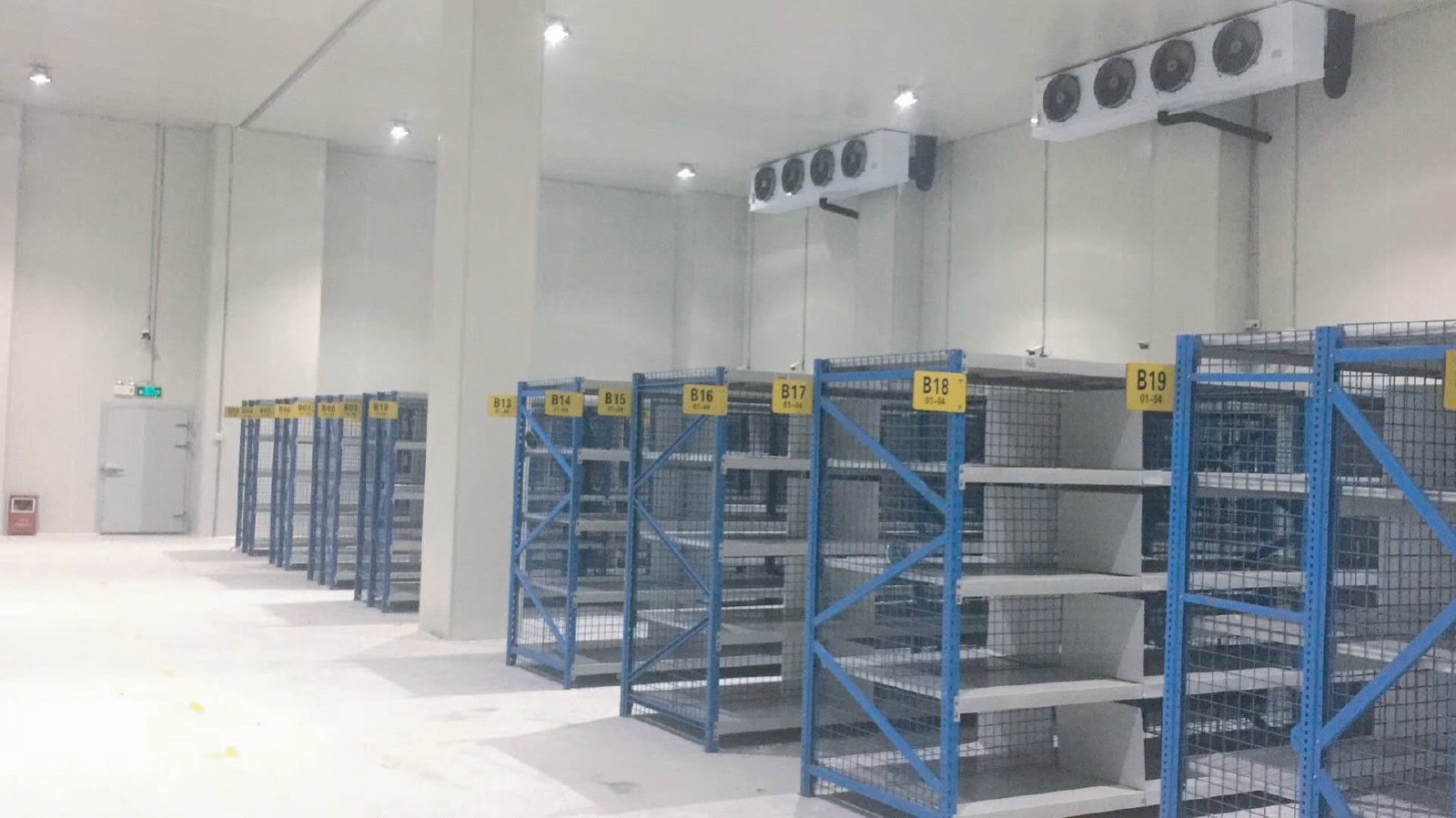
Cold storage systems keep ice, seafood, meat, produce and frozen goods within a controlled temperature range for processing, storage and distribution.
Cold storage selection factors
A cold room should be sized by product load, target temperature, daily turnover and door-opening frequency. AIM Refrigeration reviews insulation panel thickness, evaporator selection, compressor unit, door type, defrost method and whether the room connects with an ice plant or processing line.
Chilled, frozen or blast freezing
Different products require different room temperatures, pull-down speed and evaporator arrangements.
Product quantity and turnover
Daily loading, packaging, pallet height and door openings affect refrigeration capacity.
Panel, floor and door
Insulation thickness, floor load, anti-condensation and door type should match the application.
Cold-chain integration
Ice factories and seafood plants may need storage rooms connected with ice delivery or processing flow.
Cold storage options
0C-5C cold storage
For fresh produce, beverages, dairy, seafood handling and short-term cold-chain storage.
Prepare room size, product type, loading temperature and door-opening frequency.
-18C to -22C cold storage
For frozen food, meat, seafood and long-term low-temperature storage.
Prepare storage volume, pallet plan, product turnover and defrost requirements.
-35C to -40C blast freezer
For products that need rapid temperature pull-down before frozen storage or shipment.
Prepare product weight per batch, inlet temperature and freezing time target.
40F and 20F reefer
For mobile, temporary or compact cold-chain projects where container layout is practical.
Prepare container size, power supply, temperature range and loading method.
Solar Powered storage
For areas where power supply is limited and refrigeration needs backup or renewable support.
Prepare solar condition, backup power plan and daily cooling load.
Need a cold room matched to product load?
Send product type, room size, temperature range and daily loading. AIM Refrigeration will support equipment selection.
Technical questions buyers ask before choosing Cold Storage.
These points help overseas buyers compare capacity, condenser type, project data and equipment scope before requesting a quotation from AIM Refrigeration.
What information is needed for a cold room quotation?
Useful data includes room size, product type, inlet temperature, target storage temperature, daily loading volume, door opening frequency, installation country and power supply.
How are cold room panels selected?
Panel thickness and insulation type depend on temperature range, climate, room size, product load and energy target. Frozen and blast freezer rooms normally require stronger insulation than chilled rooms.
Can cold storage be combined with ice machines?
Yes. Seafood, ice trading and cold-chain projects may combine cold rooms with flake ice, block ice, tube ice, packing systems or chilled water equipment.