Industrial water chiller systems for process cooling, concrete batching, food production, plastics, chemical processing and central refrigeration utilities.
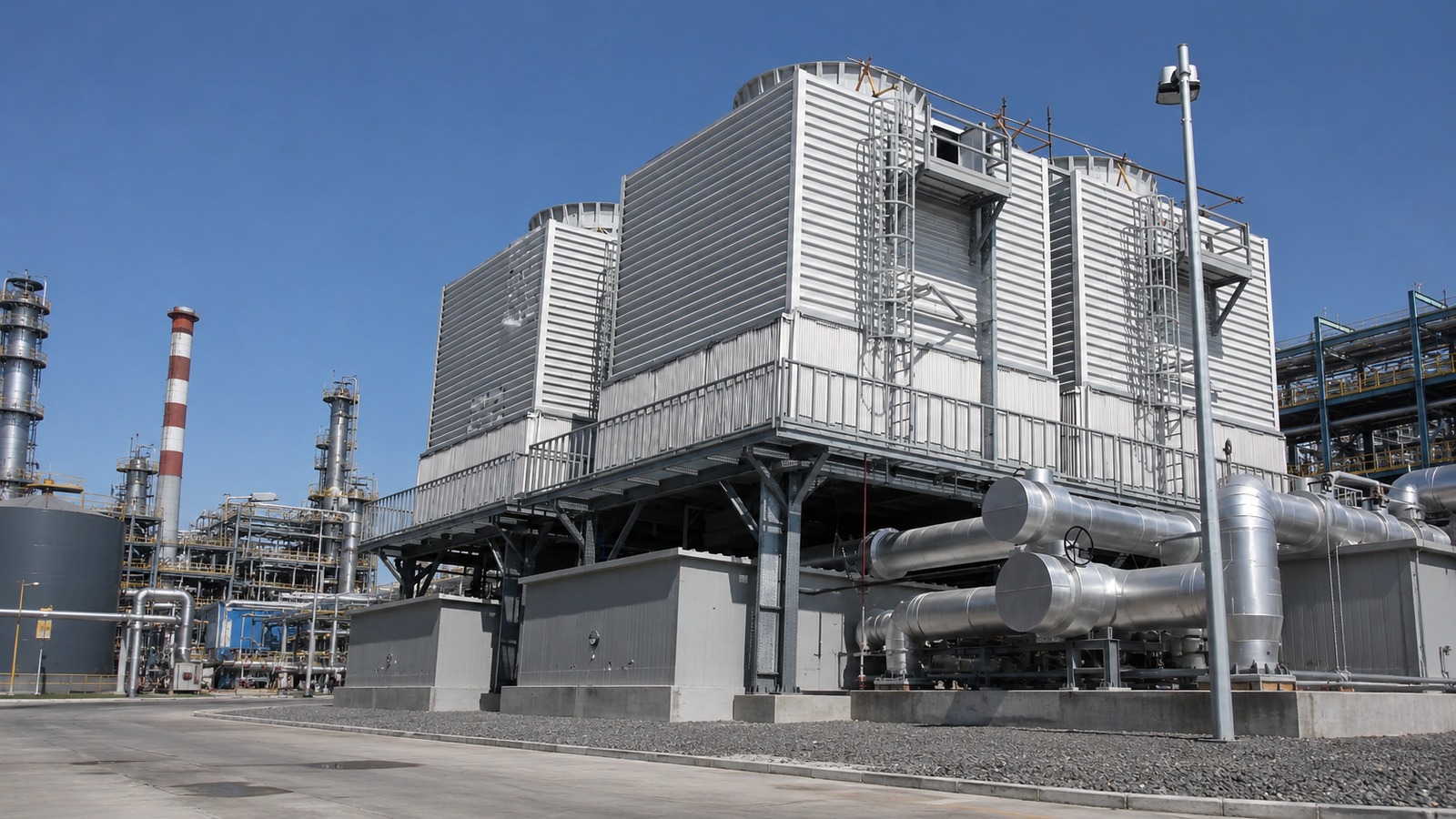
Built around real cooling utilities
Industrial water chillers are part of a larger chilled-water loop. AIM Refrigeration reviews heat rejection, chilled-water distribution, pump arrangement, control logic and site utilities before recommending an air-cooled, water-cooled or magnetic bearing centrifugal configuration.
- Central chilled-water plants and production utility rooms
- Cooling tower, condenser-water and pipework coordination
- Process cooling loops for factories, food plants and concrete batching
Choose the right chiller architecture first
Water chiller selection starts with the way the site removes heat and how the cooling load changes during production. AIM Refrigeration now organizes this range into three practical paths: air-cooled chillers for independent installation, water-cooled chillers for factories with condenser-water utilities, and magnetic bearing centrifugal chillers for larger central chilled-water plants.
Air Cooled Chiller
Best suited to projects where cooling-tower water is unavailable, water use must be limited or a self-contained installation is preferred. The AS range covers compact systems from 1AS to 30AS, with reference cooling capacities from 3 kW to 90 kW.
View Air Cooled Chiller modelsWater Cooled Chiller
Designed for factories and process lines with a cooling tower, closed condenser-water circuit or other stable heat-rejection source. The WS range covers 3WS to 30WS, with reference cooling capacities from 9 kW to 90 kW.
View Water Cooled Chiller modelsMagnetic Bearing Centrifugal Chiller
Recommended for larger central chilled-water plants where long running hours, part-load efficiency, low vibration and reduced oil-system maintenance are important to lifecycle cost.
View Magnetic Bearing Chiller guidanceWhich chiller layout fits the site?
There is no single condenser or compressor platform that fits every factory. The practical choice depends on cooling capacity, installation climate, available utilities, operating hours, noise requirements, water treatment capability and whether the project is a compact process loop or a central cooling plant.
| Selection point | Air Cooled Chiller | Water Cooled Chiller |
|---|---|---|
| Heat rejection | Finned condenser and fans reject heat directly to ambient air. | Condenser water transfers heat through a cooling tower or water loop. |
| Water utility | No condenser-water loop is required; only the chilled-water circuit is connected. | Requires condenser-water piping, water treatment and suitable heat-rejection equipment. |
| Typical installation | Outdoor plant rooms, compact factories, retrofit projects and locations with limited water supply. | Continuous process plants with an existing cooling tower or centralized utility loop. |
| Maintenance focus | Condenser coil cleanliness, fan operation, airflow and ambient temperature. | Cooling-tower condition, condenser-water quality, flow rate and scaling control. |
| Quotation starting point | Cooling load, ambient design temperature, airflow space and electrical supply. | Cooling load, condenser-water temperature, flow, tower capacity and water treatment. |
When to consider magnetic bearing centrifugal
For central chilled-water plants with high annual operating hours, magnetic bearing centrifugal chillers can reduce friction loss, vibration and oil-system maintenance while improving part-load operation.
Review the magnetic bearing optionUse project data, not only model names
Cooling load, chilled-water temperature, condenser-water condition, plant-room layout, redundancy and control interface should be reviewed before final equipment selection.
Where industrial water chillers are used
Production equipment
Deliver stable chilled water to molds, hydraulic systems, laser equipment, chemical processes and other heat-generating machinery.
Batching and large pours
Reduce mixing-water temperature and coordinate with flake ice or ice storage when concrete temperature limits are strict.
Hygienic cooling loops
Support ingredient preparation, beverage processing, product cooling and utility-water temperature control.
Integrated project systems
Connect chilled-water or brine circuits with cold rooms, ice plants, vacuum cooling and other refrigeration equipment.
Technical and application references
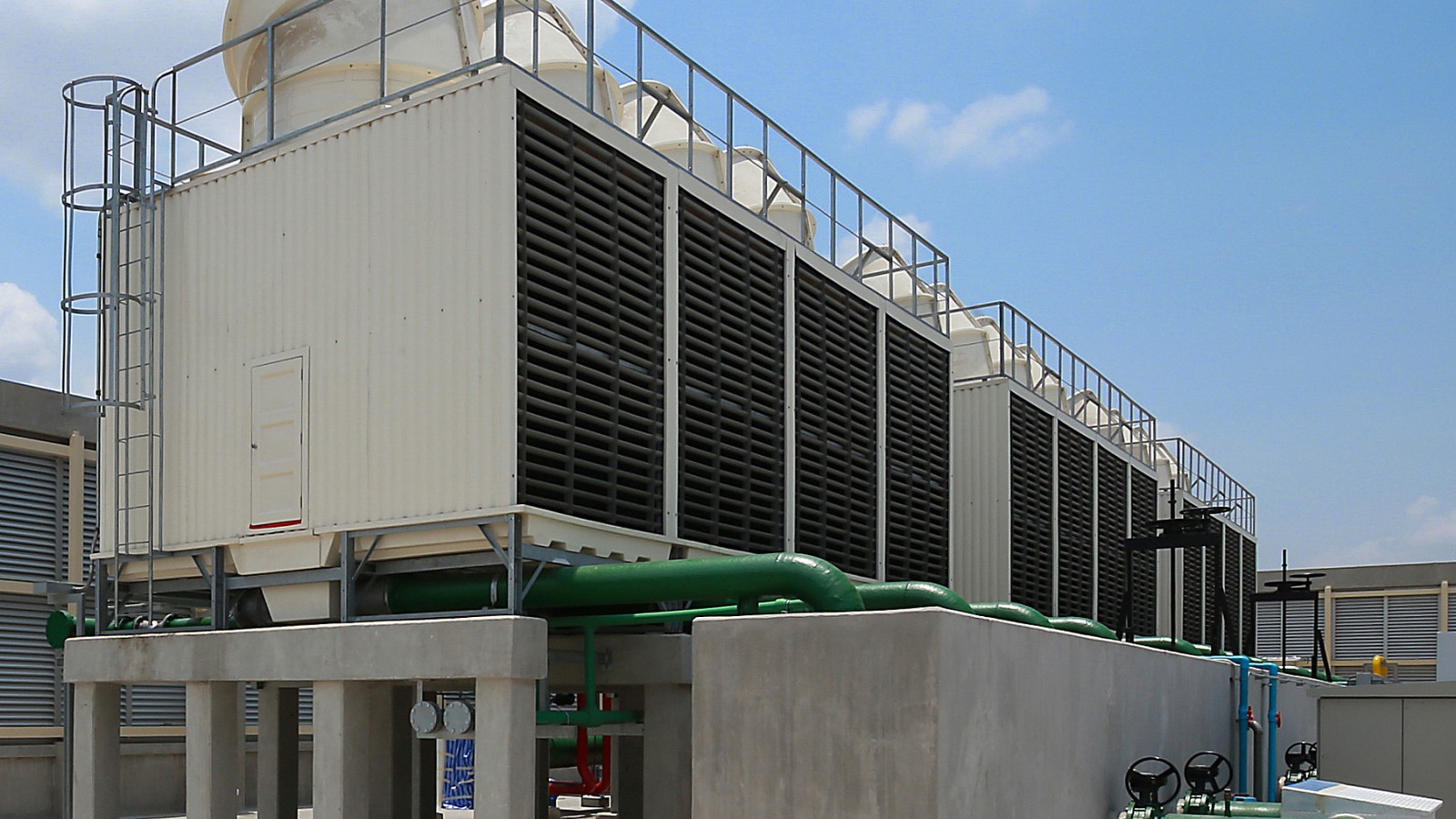
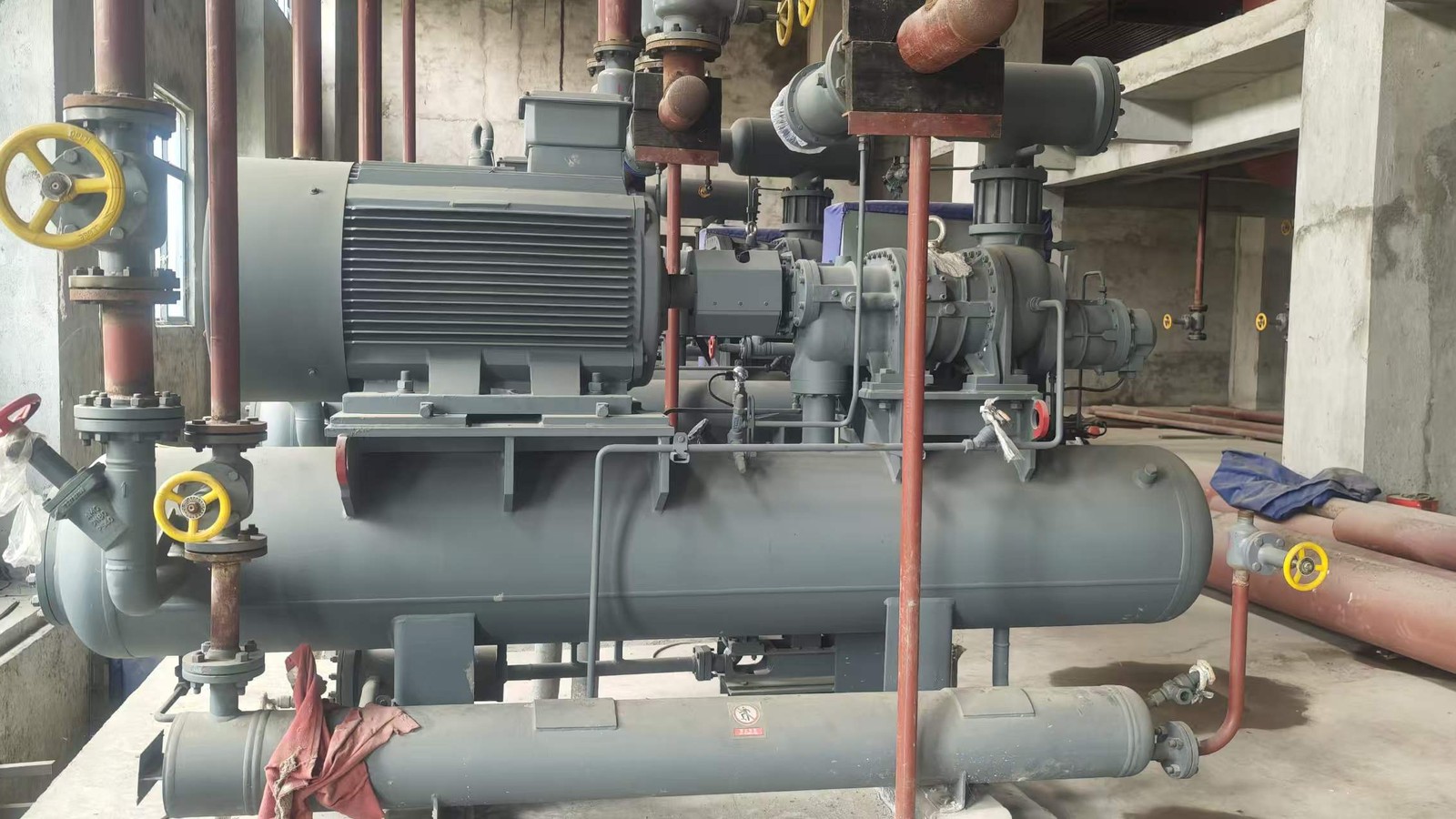
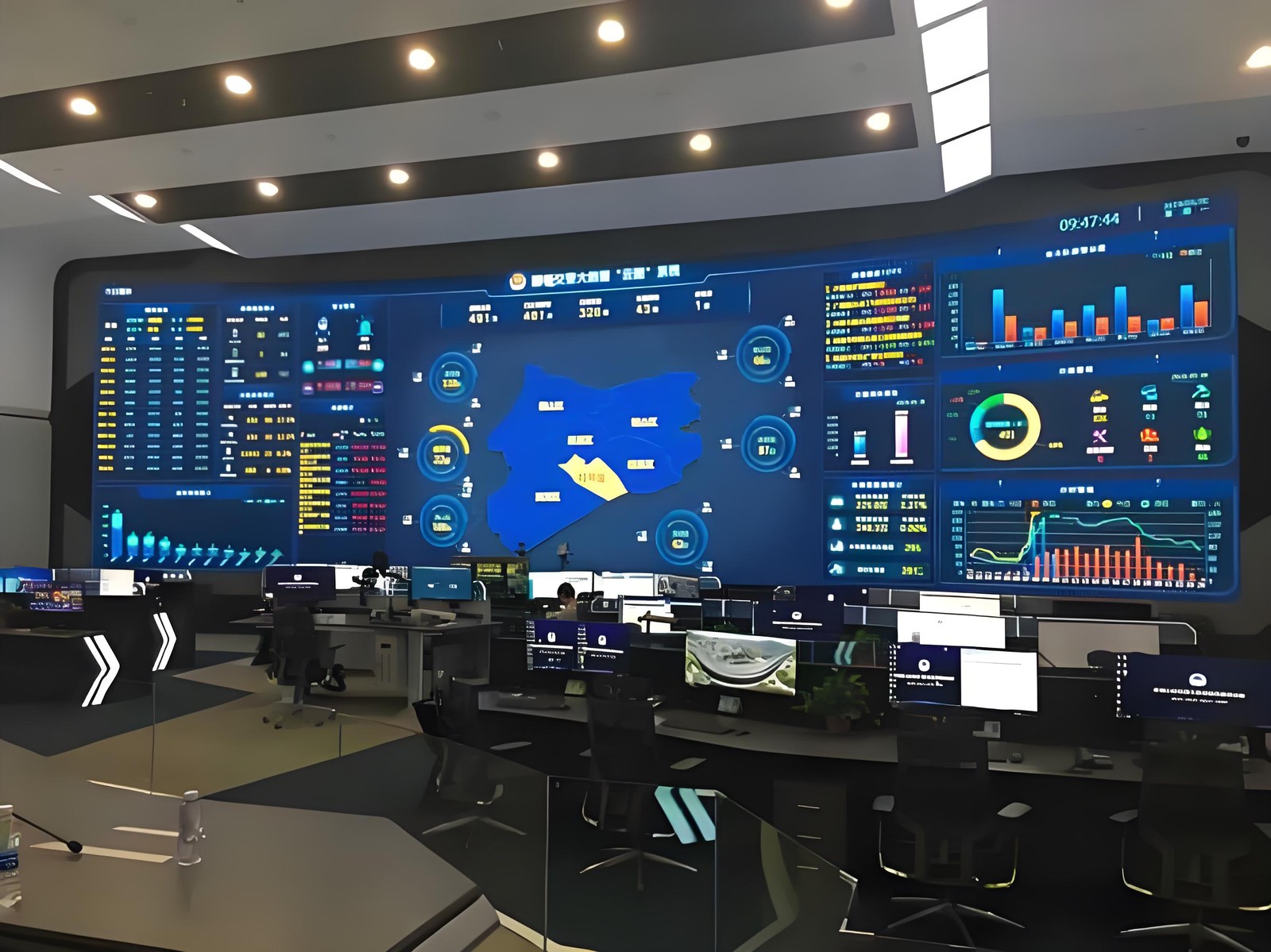
These visuals help buyers connect the chiller category with the actual project environment: heat rejection, chilled-water distribution and control supervision.
Information AIM needs before sizing
To recommend a practical model, AIM Refrigeration reviews the actual process rather than selecting from capacity alone. Please prepare the cooling load or heat source, inlet and outlet water temperature, required flow, installation country, ambient design temperature, voltage and operating schedule. For water-cooled and magnetic bearing centrifugal systems, include condenser-water temperature, available flow, cooling-tower information and plant-room requirements.
- Required cooling capacity and process application
- Inlet water temperature, outlet target and flow rate
- Ambient condition, installation space and electrical supply
- Condenser method, water source and maintenance capability
- Need for a pump, buffer tank, controls or integration with another system
Need help comparing chiller configurations?
Send your cooling load, water temperatures and site utilities. AIM Refrigeration will direct the inquiry to the correct chiller category and prepare a project-based recommendation.
Technical questions buyers ask before choosing Industrial Water Chiller Systems.
These points help overseas buyers compare capacity, condenser type, project data and equipment scope before requesting a quotation from AIM Refrigeration.
How should a buyer choose an industrial water chiller?
Selection should be based on cooling capacity, inlet and outlet water temperature, ambient temperature, operating hours, pump requirements, condenser type and power supply.
Is air-cooled or water-cooled better for a chiller?
Air-cooled chillers simplify installation where water is limited. Water-cooled chillers can be more efficient for larger plants when cooling tower water and maintenance are available.
Can chillers be used together with ice machines for concrete cooling?
Yes. Concrete cooling systems often combine chilled water, flake ice production, ice storage, delivery conveyors, weighing hoppers and batching plant control.