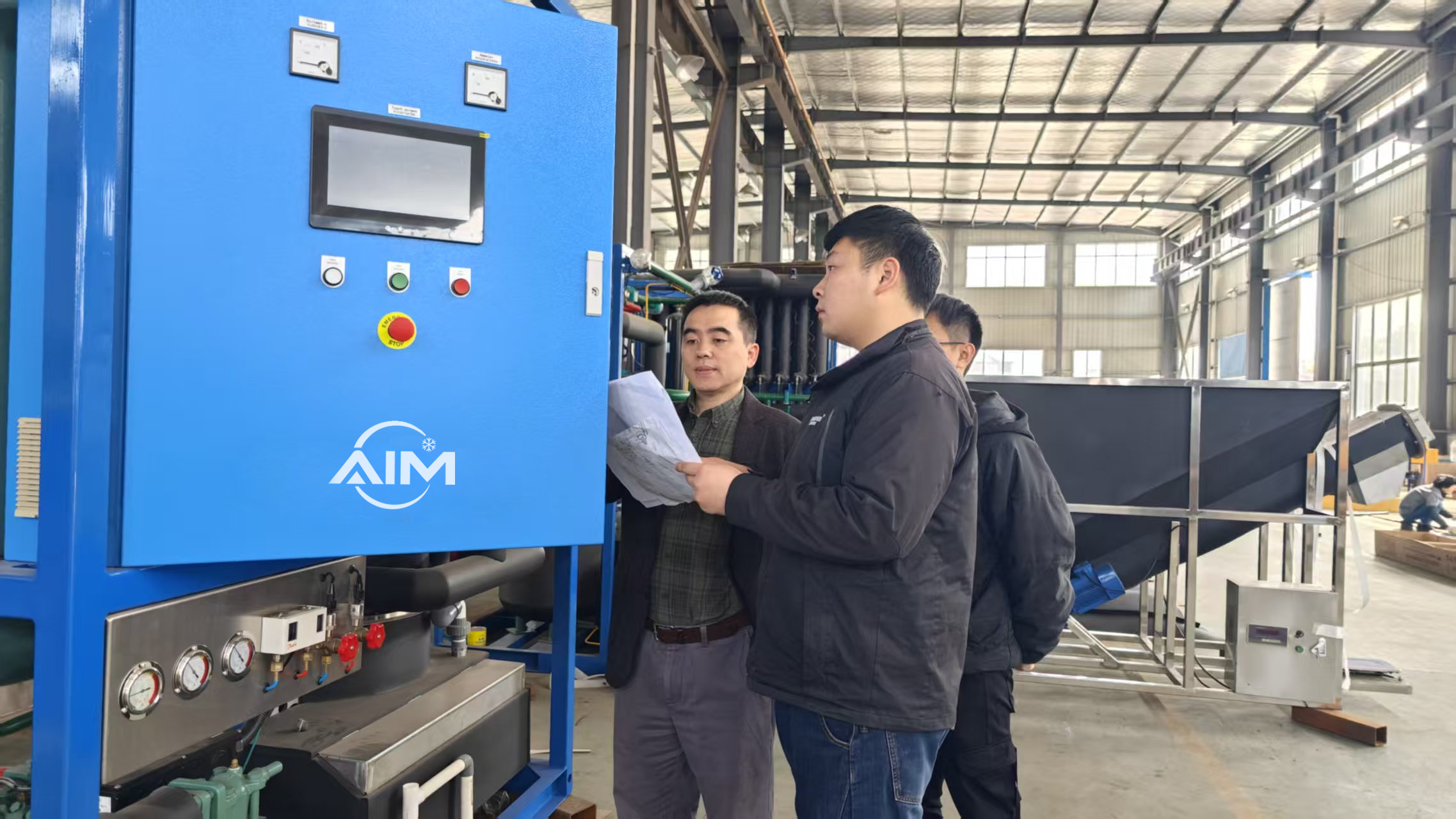
Professional concrete cooling solutions for batching plants and mass concrete projects.
AIM Refrigeration is professional in concrete cooling and supports contractors, batching plant owners and overseas project teams with complete temperature-control systems. For hot-climate construction and mass concrete pours, AIM Refrigeration designs integrated solutions that combine chilled water, flake ice production, automatic ice storage, ice conveying, weighing and PLC control.
Instead of supplying only one machine, AIM plans the cooling process around the concrete recipe, hourly batching capacity, target discharge temperature, site climate and available utilities. This helps the project reduce fresh concrete temperature, improve workability and lower the risk of thermal cracking.
Why concrete temperature control matters
In hot-weather concreting, the temperature of cement, aggregates, mixing water and ambient air can push fresh concrete above the project limit before it reaches the placing point. Higher concrete temperature accelerates hydration, shortens setting time, increases slump loss and can create a larger temperature difference between the core and the surface of mass concrete. For dams, bridges, foundations, tunnels, precast yards and ready-mix plants, a stable cooling plan is often required before continuous pouring can begin.
Lower discharge temperature
Use chilled water, flake ice or a combined system to reduce the temperature of the concrete leaving the mixer.
Improve site consistency
Automated ice dosing and water temperature control help the batching plant repeat the same cooling result across multiple batches.
Support thermal crack control
Controlled fresh concrete temperature helps reduce thermal stress in large-volume pours when combined with correct mix design and curing plans.
AIM Refrigeration project approach
Concrete cooling is a system engineering job. AIM Refrigeration reviews the temperature contribution of each material, calculates the practical cooling load and then recommends whether the project should use chilled water, flake ice, or a combined ice-water cooling plant. The goal is to make the cooling system match the real batching rhythm instead of oversizing or undersizing one piece of equipment.
Temperature calculation
Review ambient temperature, aggregate temperature, cement temperature, water temperature, concrete output and target discharge temperature.
System layout
Plan the chiller, ice machine, storage room, conveyor, weighing hopper, water tank and control cabinet around the batching plant layout.
Automatic dosing
Use screw conveyors, weighing devices and PLC logic so ice and chilled water can be delivered accurately into the mixer.
Commissioning support
Support overseas installation with drawings, remote guidance and practical operating settings for local construction conditions.
Cooling methods available for concrete plants
| Cooling method | Best-fit project | System focus |
|---|---|---|
| Chilled water cooling | Ready-mix plants, standard batching plants and moderate temperature reduction. | Concrete chiller, insulated water tank, circulation pump, plate heat exchanger and temperature control. |
| Flake ice cooling | Hot climates, high concrete output and projects that require stronger temperature drop. | Flake ice machine, ice storage, rake system, screw conveyor, weighing hopper and mixer integration. |
| Ice-water combined cooling | Mass concrete, dam construction, bridge foundations and strict discharge temperature targets. | Chilled water system plus flake ice dosing to balance fast cooling, output capacity and operating cost. |
| Containerized cooling plant | Overseas projects, temporary construction sites and fast installation needs. | Pre-assembled refrigeration modules, electrical control, compact piping and reduced on-site work. |
Complete concrete cooling system configuration
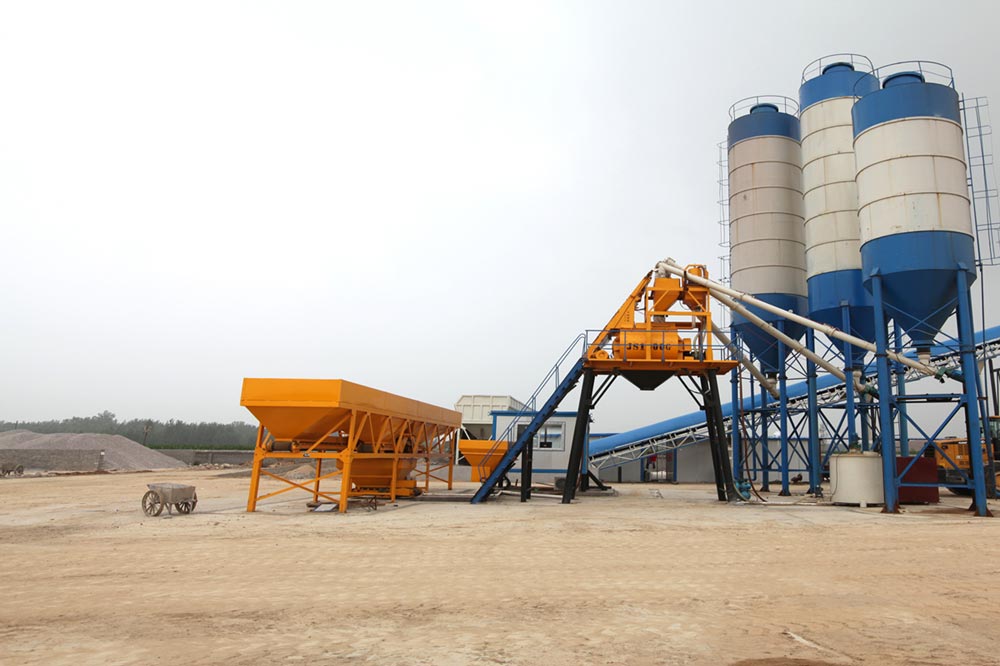
A practical concrete cooling system is more than a single chiller or ice machine. The equipment should be selected as a complete process so that cooling capacity, ice storage volume, ice discharge speed, conveyor route and weighing accuracy match the batching plant output.
Main equipment modules
Flake ice machine
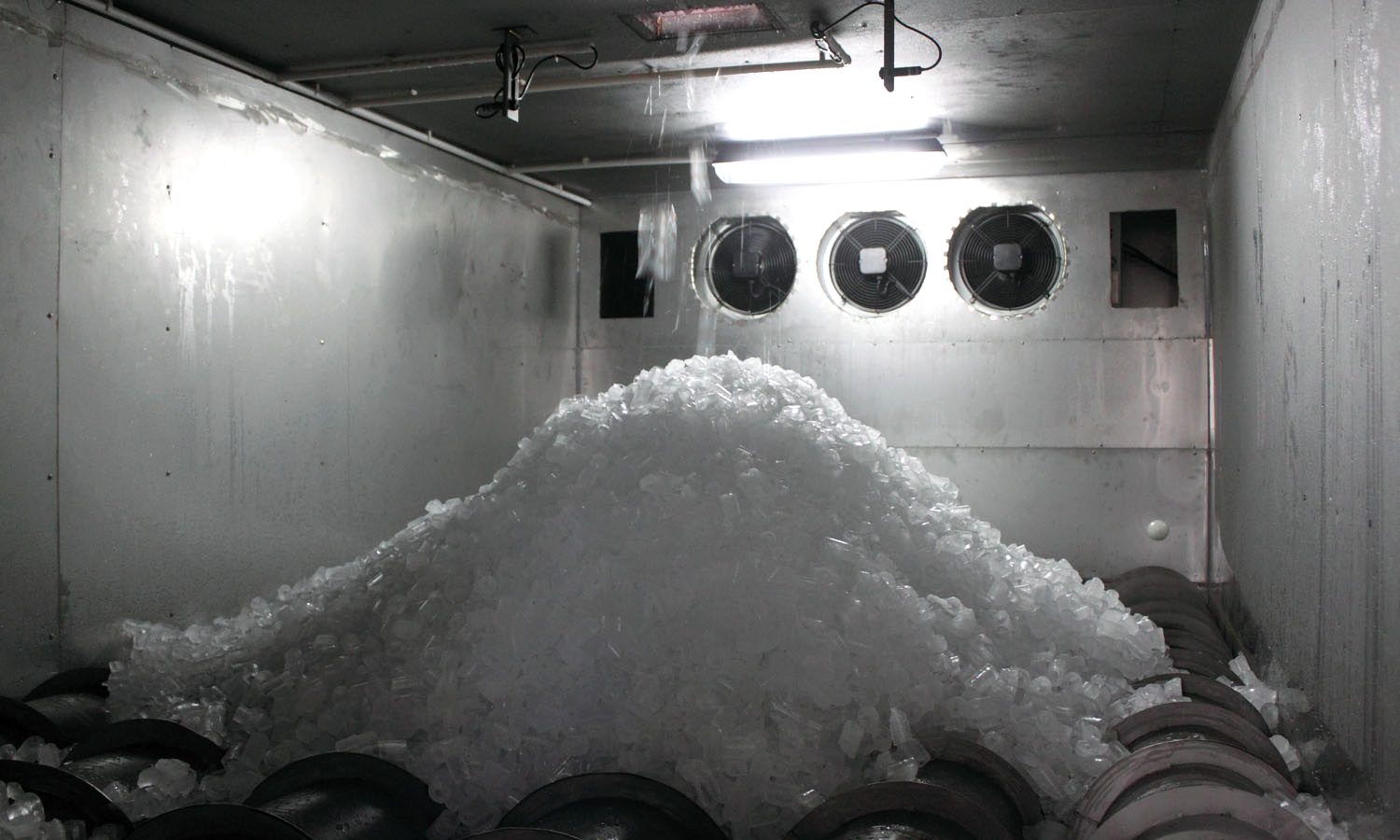
Produces thin, dry ice with a large contact surface. Flake ice melts quickly during mixing and is widely used when the concrete temperature target is lower than chilled water alone can achieve.
Concrete chiller
Supplies chilled water to the batching plant. Air-cooled, water-cooled and evaporative-cooled configurations can be selected according to site utilities and climate.
Automatic ice storage
Balances continuous ice production and intermittent batching demand. The insulated storage can include rake discharge, automatic ice outlet control and anti-bridging design to reduce manual handling.
Screw conveyor or belt conveyor
Transfers flake ice from storage to the batching plant. Conveyor route, angle, insulation and discharge point should be planned according to the mixer position and plant structure.
Ice weighing hopper
Measures the required ice quantity before every batch. This is important for repeatable concrete temperature control and for reducing variation between different pours.
Aggregate cooling support
For strict mass concrete projects, aggregate shading, pre-cooling airflow or project-specific aggregate cooling can be considered together with chilled water and flake ice.
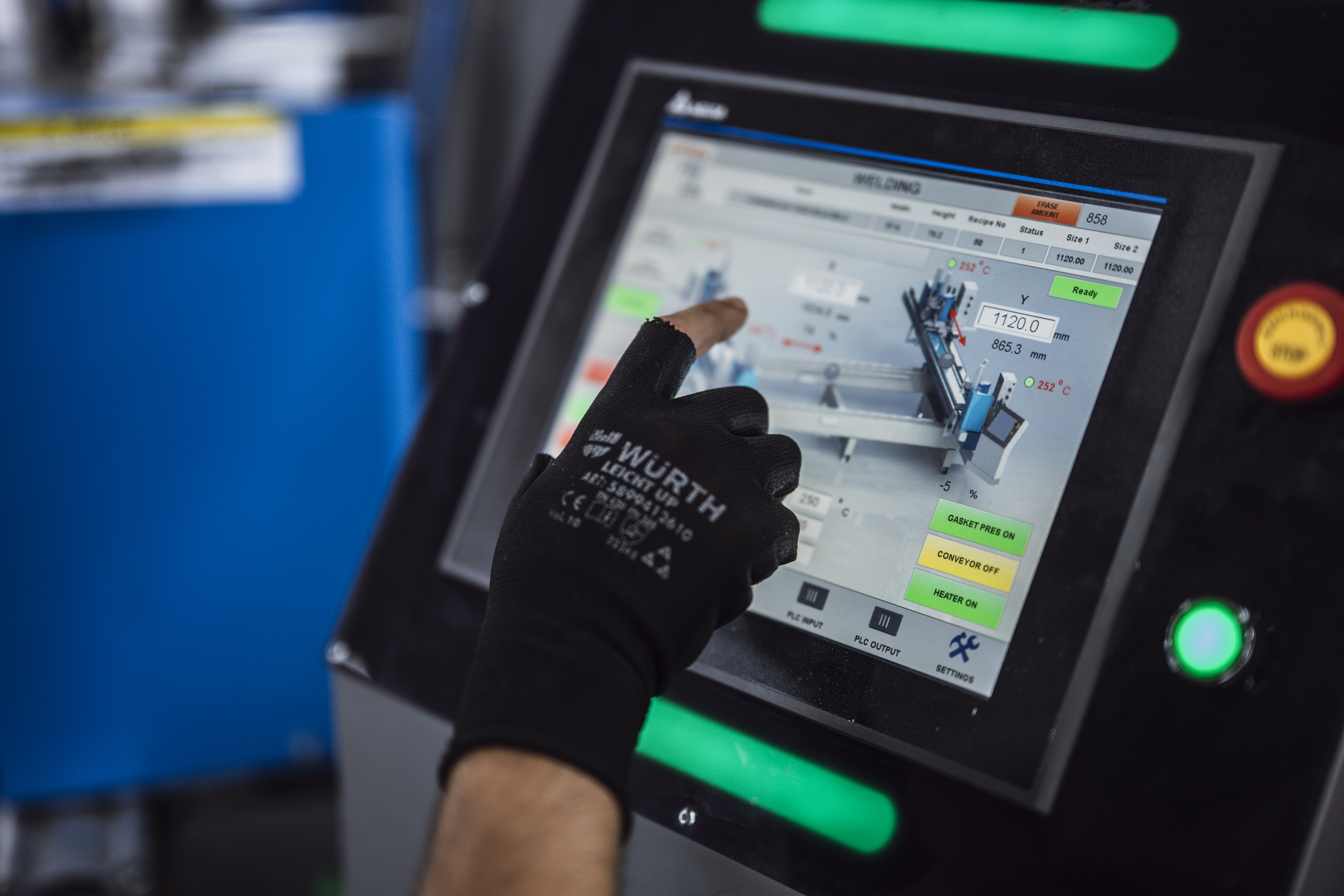
Dosing, weighing and PLC control
Ice or chilled water can be measured before entering the mixer. Control logic can be connected with the batching plant to improve repeatability and reduce manual handling.
Applications
For ready-mix suppliers that need stable discharge temperature during summer production or in tropical regions.
For large-volume concrete where temperature rise and core-surface temperature difference must be controlled carefully.
For continuous pours, pile caps, tunnel segments and infrastructure projects with strict quality requirements.
For plants that require stable early-age performance and repeatable production conditions.
For raft foundations, industrial bases and other mass concrete pours where heat build-up can become a quality risk.
Containerized and modular systems can reduce field installation work where local refrigeration service resources are limited.
Selection data required for an accurate design
The right cooling method depends on the heat load of the entire concrete recipe, not only the target water temperature. Send the following data and AIM Refrigeration can prepare a practical configuration and quotation.
- Hourly concrete output and daily working hours
- Ambient temperature at the jobsite
- Aggregate temperature and storage condition
- Cement temperature and cement content per cubic meter
- Mixing water temperature and water volume
- Required concrete discharge temperature
- Batching plant mixer type and layout drawing
- Available power supply and installation country
- Preference for chilled water, flake ice or combined cooling
- Required automation level and connection to existing plant control
Typical system options
| System type | Recommended use | Key equipment |
|---|---|---|
| Chilled water package | Moderate cooling demand and plants with stable water supply. | Concrete chiller, water tank, pump set, temperature sensors and electrical cabinet. |
| Flake ice package | Strong cooling demand, high ambient temperature and high-output batching plants. | Flake ice machine, refrigeration unit, insulated storage, rake, screw conveyor and weighing device. |
| Integrated cooling plant | Projects requiring both chilled water and ice for flexible temperature control. | Chiller, ice machine, storage, delivery system, PLC cabinet and mixer interface. |
| Containerized system | Temporary sites, overseas EPC projects and projects requiring fast relocation. | Containerized refrigeration skid, pre-wired control, compact piping and optional storage module. |
Engineering features
Project-specific calculation
Cooling capacity is estimated from concrete output, ingredient temperatures, required discharge temperature and operating schedule.
Flexible condenser selection
Air-cooled, water-cooled and evaporative-cooled systems can be matched to local water resources, ambient temperature and maintenance conditions.
Controlled ice delivery
Ice storage, screw conveying and weighing systems help deliver the correct amount of ice to the mixer at the right moment.
Batching plant integration
The system can be designed for automatic or semi-automatic operation according to the existing batching plant control architecture.
Related equipment
Flake Ice Machine
Thin flake ice for concrete cooling, seafood processing, chemical cooling and industrial temperature control.
View flake ice machinesWater Chiller
Industrial chilled water equipment for concrete batching, process cooling and refrigeration systems.
View water chillersIce Storage
Insulated ice storage, rake discharge and ice delivery planning for projects that need continuous production and fast batch demand.
View ice storageConveying and weighing system
Screw conveyors, ice weighing hoppers, control cabinets and mixer interfaces can be designed together with the batching plant layout.
Request system layoutConcrete cooling FAQ
What is a concrete cooling system?
It is a group of refrigeration and handling equipment used to reduce fresh concrete temperature before placement. A system may include a concrete chiller, flake ice machine, ice storage, conveyor, weighing hopper and control cabinet.
Why is flake ice used in concrete cooling?
Flake ice has a large surface area and melts quickly inside the mixer. It absorbs heat directly from the mix and can achieve a stronger temperature drop than chilled water alone.
Concrete chiller or flake ice system: which is better?
A chiller is suitable for moderate cooling and simple operation. Flake ice is preferred when ambient temperature is high, concrete output is large or the target discharge temperature is strict. Many projects use both.
Can the system connect to an existing batching plant?
Yes. The equipment can be designed with independent operation or connected to the batching plant control system for automatic dosing and batch records.
What information is needed for quotation?
Please provide hourly concrete output, ingredient temperatures, target discharge temperature, daily working hours, country, voltage and batching plant layout.
Is a containerized concrete cooling system available?
Yes. Containerized or skid-mounted configurations are available for overseas projects, temporary construction sites and projects that need faster installation.
Need a concrete cooling calculation?
Send your batching plant output, ingredient temperatures and target discharge temperature. AIM Refrigeration will recommend whether chilled water, flake ice or a combined system is more suitable.