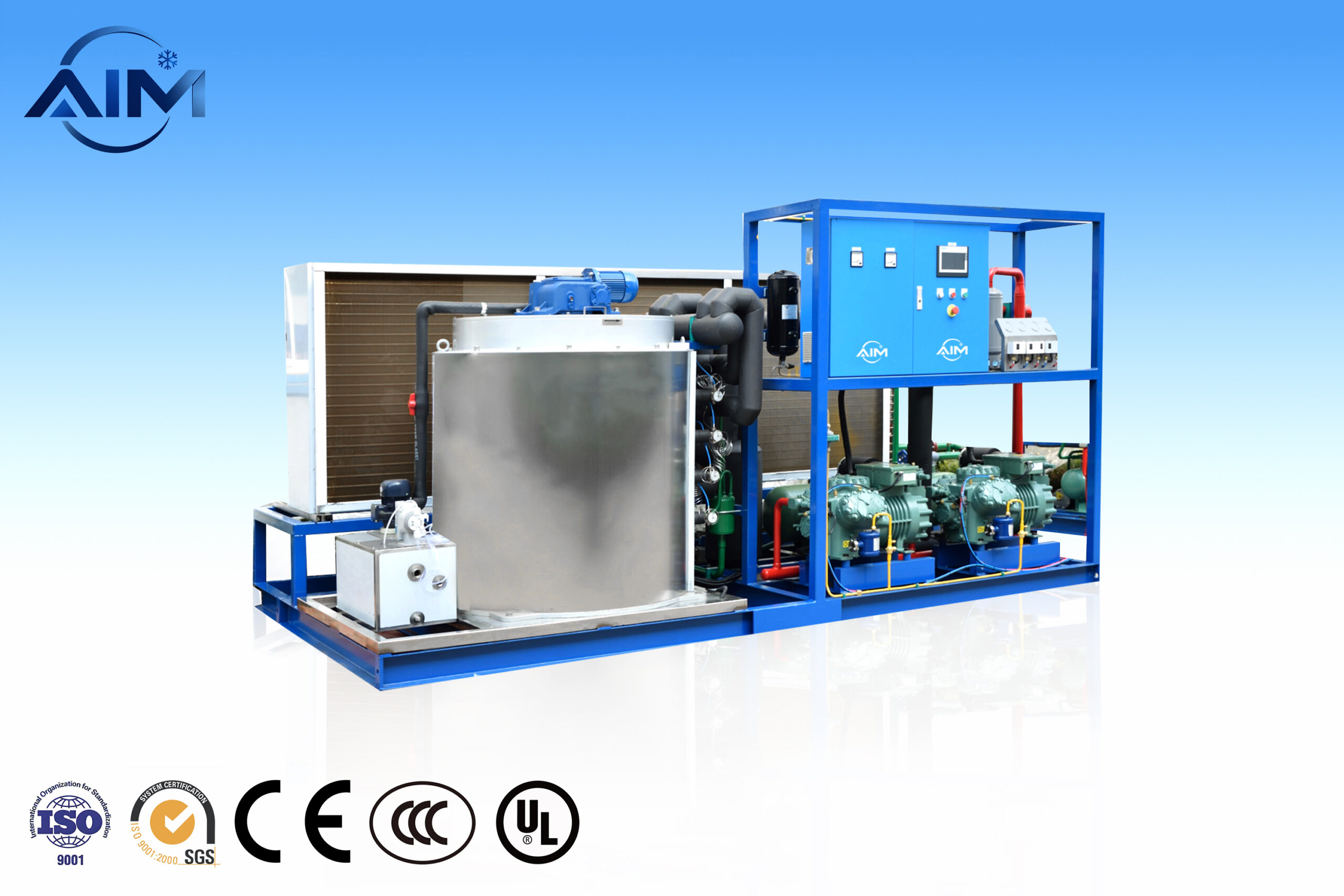
Flake ice machines produce thin, dry ice with a large contact surface for seafood cooling, food processing, concrete temperature control and industrial heat removal.
Selected for fast heat transfer, not ice appearance
Flake ice is usually chosen when the cooling job is urgent and practical. The thin ice layer has broad contact area, mixes easily with products and melts quickly when heat must be absorbed. That makes it suitable for fish and seafood, meat mixing, produce handling, chemical cooling and concrete batching where cooling speed matters more than decorative ice shape.
Large contact surface
Thin flakes wrap products and expose more ice area to heat, improving cooling response.
Easy mixing and dosing
Flake ice can be discharged into bins, carts, screw conveyors or weighing systems.
Direct-contact cooling
Seafood and food processors use flake ice to cool products without crushing block ice.
Concrete and industry
For batching plants, flake ice can be stored, conveyed and weighed into the mixer.
Application-driven configuration
| Application | Configuration focus |
|---|---|
| Seafood landing | Freshwater or seawater option, hygienic discharge, fast access to bins or fish boxes. |
| Food processing | Food-contact materials, cleanable ice path, steady ice supply during mixing or packing. |
| Concrete cooling | Ice storage, rake system, screw conveying, weighing hopper and batching plant interface. |
| Industrial cooling | Continuous output, mechanical delivery and coordination with production shift demand. |
Quotation data for flake ice projects
- Daily ice consumption and whether use is continuous or batch-based
- Application: seafood, food processing, concrete, chemical or other industrial cooling
- Freshwater or seawater ice requirement
- Discharge method: cart, bin, screw conveyor, weighing system or direct process feed
- Ambient temperature, water temperature, voltage and machine-room condition
Flake ice machine model range
AF-5TW
Decide whether ice drops into a cart, insulated bin or short screw conveyor.
AF-10TW
Review the workroom layout and decide if ice should feed directly to processing or first enter storage.
AF-15TE
Confirm whether the evaporator should support longer running hours and a larger insulated ice bin.
AF-20TE
Plan screw delivery height, concrete plant interface or seafood dispatch route before quotation.
AF-25TE
Define how many use points need ice and whether a central bin or multiple outlets are required.
AF-30TE
Prepare bin volume, conveyor length and condenser conditions because delivery equipment becomes critical.
AF-40TE
Coordinate machine output with storage, mechanical delivery and daily dispatch schedule as one plant.
AF-50TE
Treat the storage bin, screw conveyor and downstream loading area as part of the machine selection.
Need flake ice for process cooling?
Send application, daily ice use and discharge method. AIM Refrigeration will help define the machine, storage and delivery arrangement.
Flake ice machine models at a glance.
Nominal capacity and cooling route are shown for first-stage comparison. Final output depends on ambient temperature, inlet water temperature, voltage, operating hours and the complete site workflow.
| Model | Nominal capacity | Cooling route | Typical project fit | Details |
|---|---|---|---|---|
| AF-5TW | 5 ton/day | Water-cooled | Seafood and food-process cooling | View model |
| AF-10TW | 10 ton/day | Water-cooled | Seafood and food-process cooling | View model |
| AF-15TE | 15 ton/day | Evaporative-cooled | Seafood, concrete or process cooling | View model |
| AF-20TE | 20 ton/day | Evaporative-cooled | Seafood, concrete or process cooling | View model |
| AF-25TE | 25 ton/day | Evaporative-cooled | Seafood, concrete or process cooling | View model |
| AF-30TE | 30 ton/day | Evaporative-cooled | Seafood, concrete or process cooling | View model |
| AF-40TE | 40 ton/day | Evaporative-cooled | Central industrial ice supply | View model |
| AF-50TE | 50 ton/day | Evaporative-cooled | Central industrial ice supply | View model |
Technical questions buyers ask before choosing Flake ice machine.
These points help overseas buyers compare capacity, condenser type, project data and equipment scope before requesting a quotation from AIM Refrigeration.
Why is flake ice used for seafood and concrete cooling?
Flake ice has a thin shape and large contact area, so it melts evenly and transfers cooling quickly in seafood bins, food processing and concrete batching.
What data is needed to size a flake ice machine?
Buyers should provide daily ice demand, target application, operating hours, ambient temperature, inlet water temperature, voltage, storage method and whether automatic delivery is required.
Can a flake ice system connect with automatic storage and weighing?
Yes. For concrete cooling and large processing plants, flake ice machines can be paired with automatic ice storage, rake systems, screw delivery, weighing hoppers and mixer control.