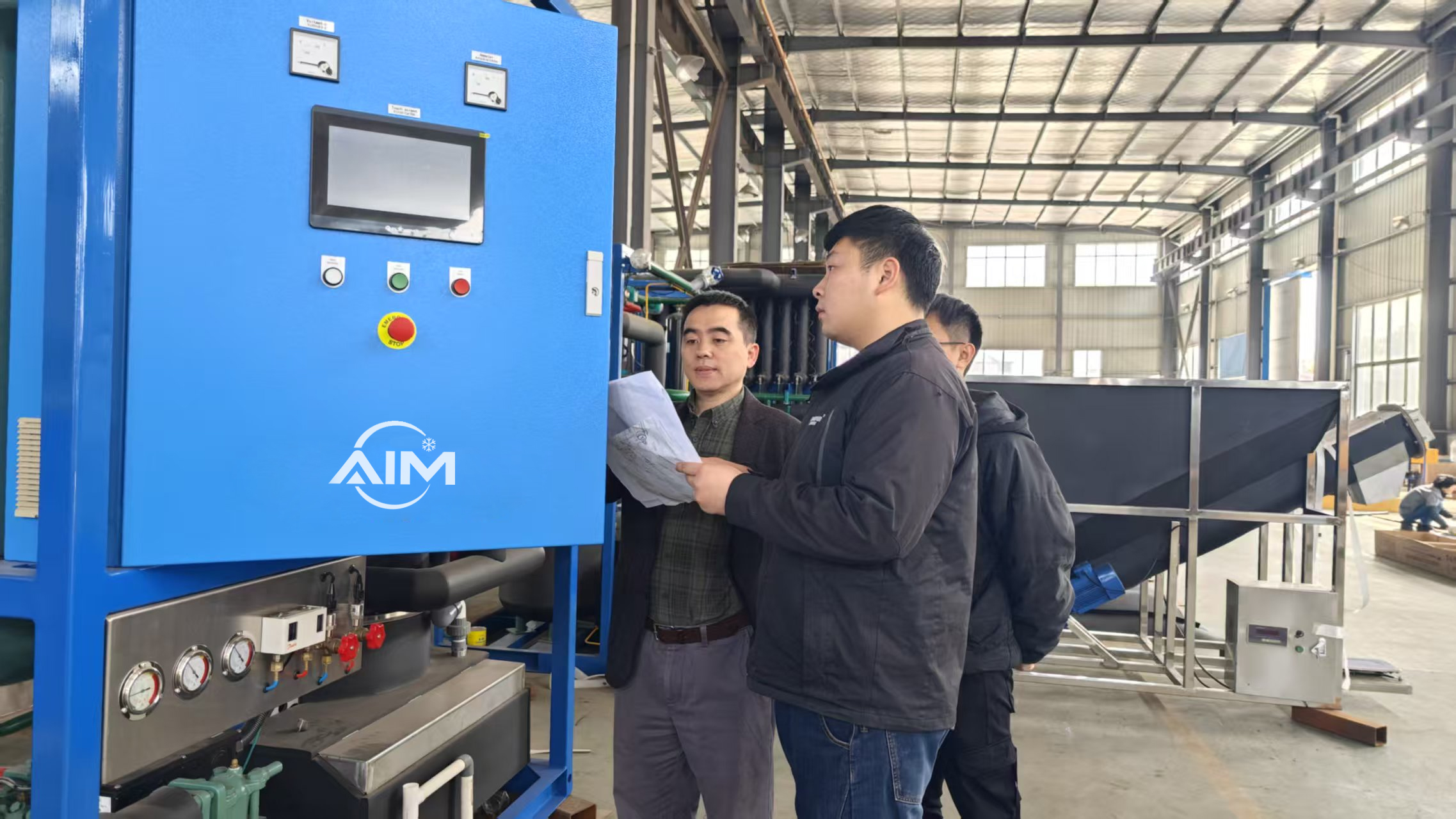
Cooling equipment engineered around the production process.
AIM Refrigeration supplies industrial ice machines, water chillers, cold storage, vacuum coolers and integrated cooling systems for food, seafood, concrete, fresh produce and process industries.
Our engineering work starts with the thermal duty and the material flow. We match ice form, chilled-water temperature, refrigeration capacity, storage volume, delivery method, controls and site utilities so the equipment works as one production system.
Industrial cooling equipment by application
AIM combines proven refrigeration product families with application-specific layouts. The equipment listed below represents the main systems we supply and integrate for industrial operations.
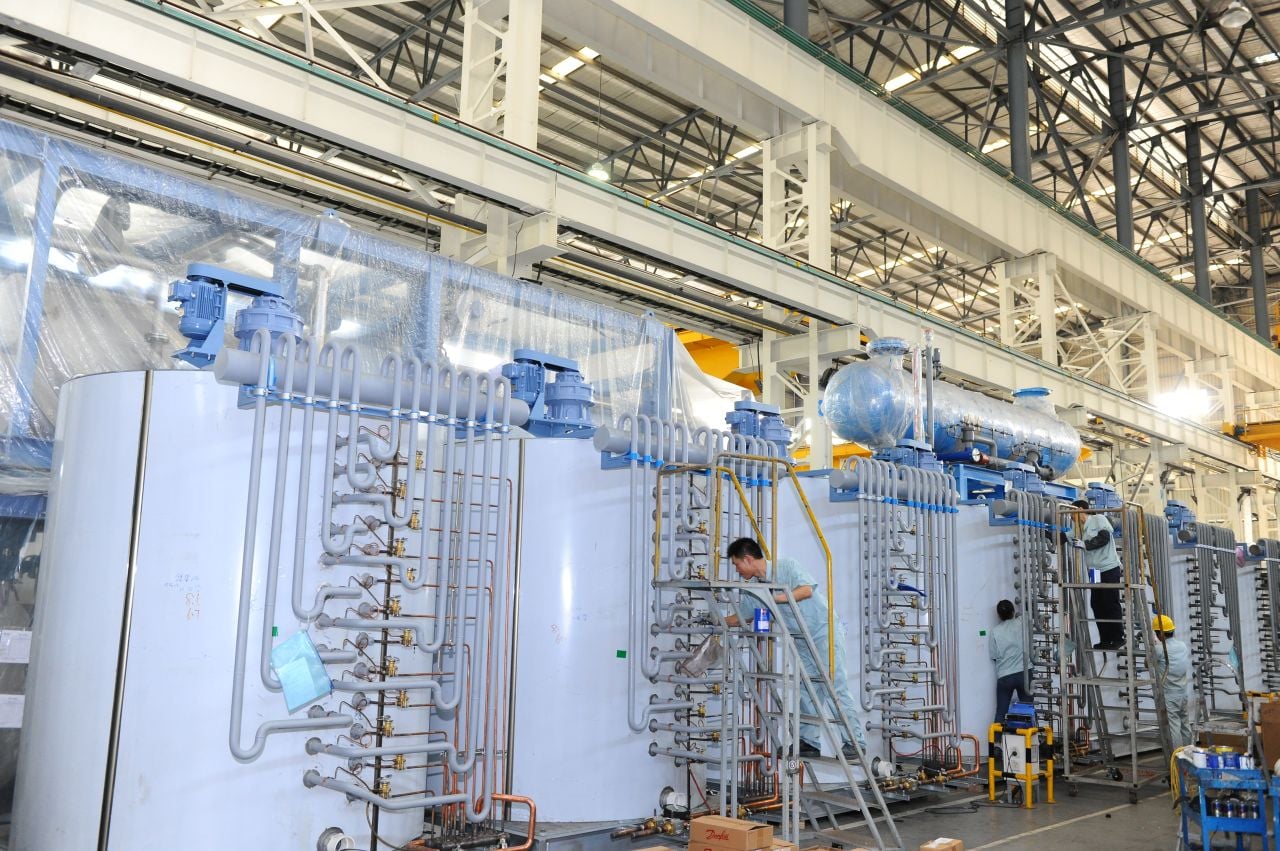
Flake, slurry and block ice systems for rapid product cooling, fishing ports, vessels, seafood processing and dispatch.
Fishery ice systemsFood-grade ice, chilled water, cold rooms and freezer rooms for meat, poultry, bakery, beverage and prepared-food production.
Food processing coolingWater chillers, flake ice plants, automatic ice storage, delivery, weighing hoppers and mixer control for batching and mass concrete.
Concrete cooling systemsTube, cube and block ice plants with storage, conveying, weighing and packing for retail and regional ice distribution.
Commercial ice equipmentVacuum pre-cooling, chilled storage and cold-chain equipment for vegetables, flowers, mushrooms and agricultural products.
Fresh produce coolingProcess chillers, cold rooms and specialized refrigeration packages for manufacturing, mining, chemicals and continuous operations.
Industrial refrigerationFrom the refrigeration circuit to the complete workflow.
A machine only performs as well as the system around it. AIM plans the refrigeration circuit, heat rejection, water path, ice handling, storage and electrical control as connected engineering decisions.
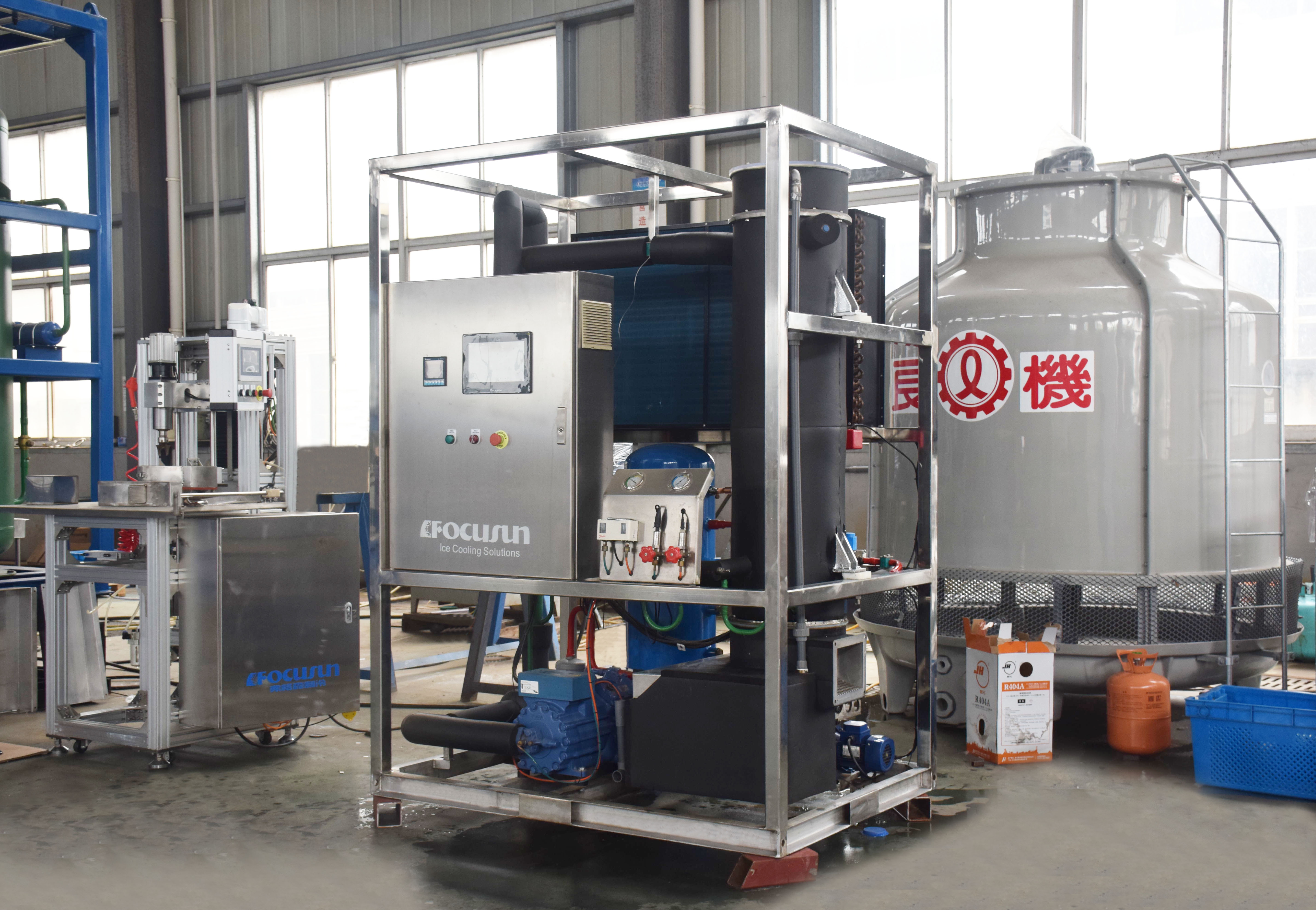
Core equipment packages supplied by AIM
These equipment blocks can be supplied as standalone machines or combined into a complete industrial cooling line. The final configuration is determined by process load, capacity, climate, utilities and the required level of automation.
Tube, cube, block, flake, plate and slurry ice
Ice geometry and production method are selected by melting rate, contact area, sanitation, transport distance and the way the ice enters the process.
Explore ice machinesAir-cooled and water-cooled process chillers
Industrial chillers provide controlled water or glycol temperature for concrete batching, food processing, plastics, chemicals and plant utilities.
View water chillersChilled rooms, freezer rooms and ice storage
Insulated rooms and ice storage buffer production, protect temperature-sensitive materials and keep dispatch independent from the instant production rate.
View cold storageConveying, weighing, packing and dosing
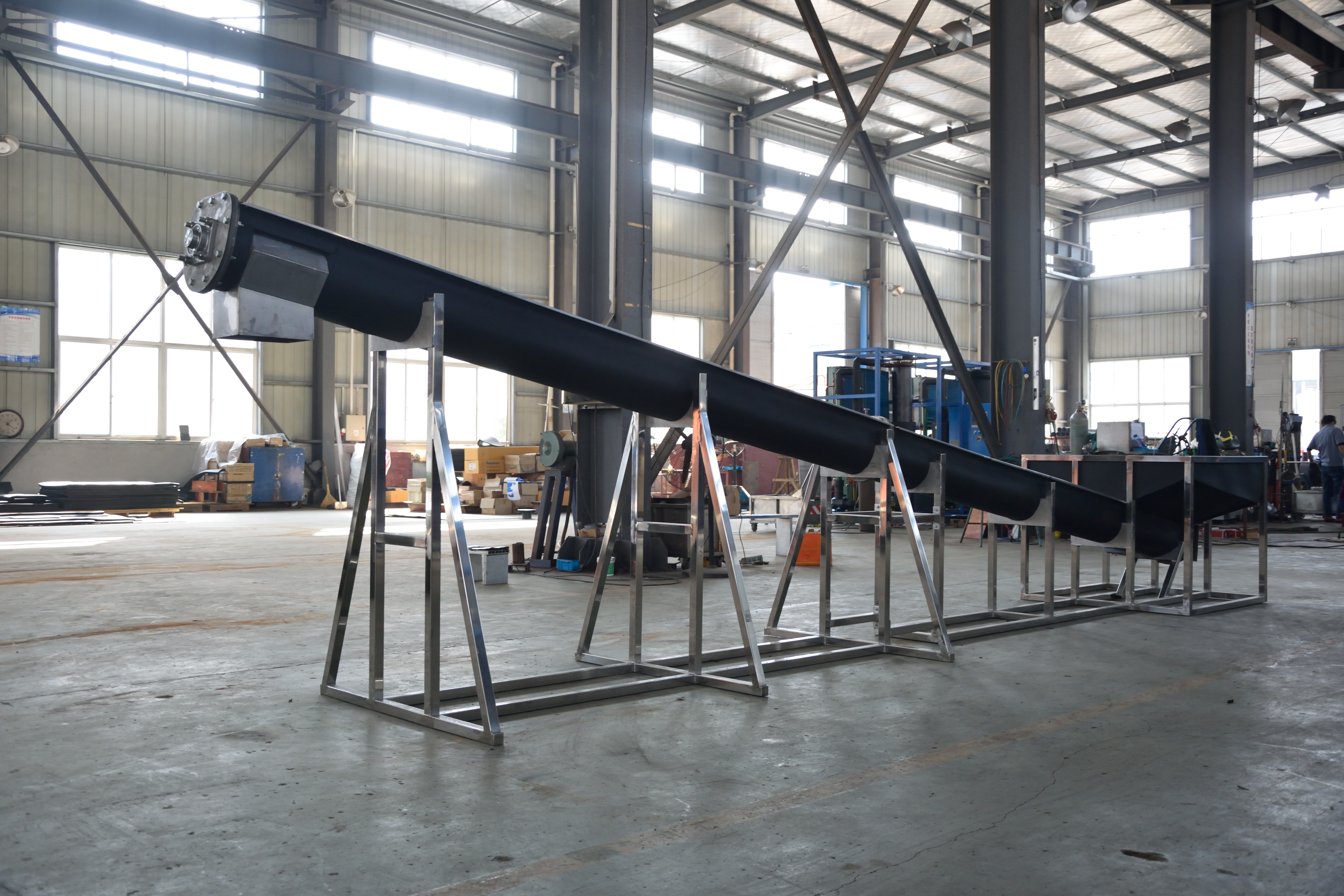
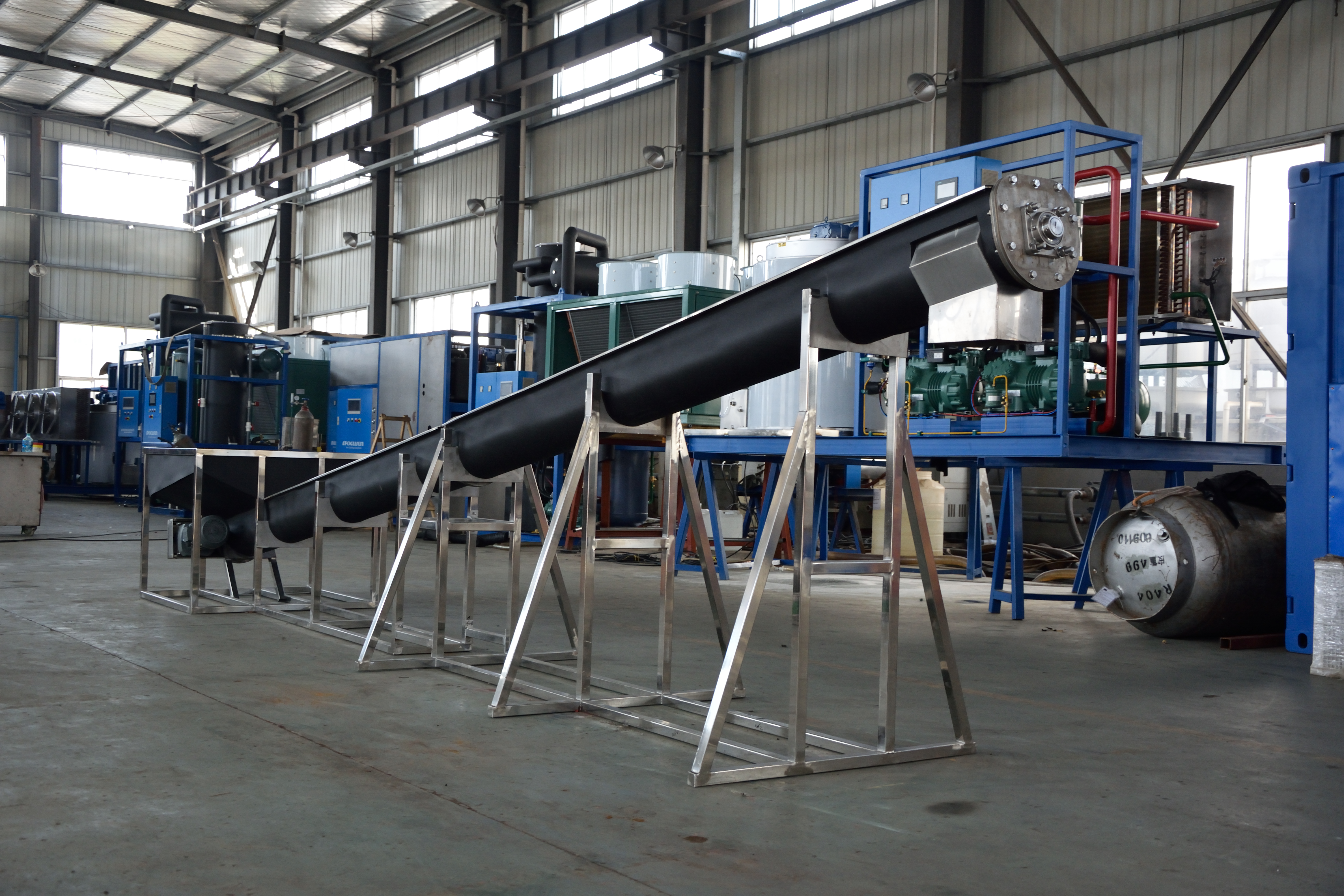
Screw conveyors, automatic storage, weighing hoppers and packing lines turn ice production into a repeatable material flow with less manual handling.
View ice handlingVacuum coolers for rapid pre-cooling
Vacuum cooling removes field heat quickly from suitable porous products and can be coordinated with chilled storage and cold-chain dispatch.
View vacuum coolersSnow, ice rink and special cooling systems
For snow parks, ice rinks and entertainment venues, AIM coordinates refrigeration capacity with snow production, ice surface and operating schedule.
View snow systemsEquipment selection by industrial duty
The table below shows how AIM maps the process duty to the primary equipment and supporting systems. It is a starting point for engineering scope, not a substitute for a site calculation.
| Industrial duty | Primary equipment | Supporting equipment | Key engineering inputs |
|---|---|---|---|
| Seafood contact cooling | Flake ice, slurry ice or block ice | Ice storage, delivery, seawater-compatible options and cold rooms | Product throughput, ice-to-product ratio, water type, ambient temperature and dispatch cycle |
| Food process temperature control | Food-grade ice machine or process water chiller | Water treatment, insulated tanks, cold rooms and hygienic drainage | Heat load, target temperature, flow rate, sanitation standard and operating hours |
| Concrete temperature reduction | Flake ice machine, concrete chiller or combined plant | Automatic ice storage, screw delivery, weighing hopper and mixer control | Hourly concrete output, aggregate temperature, target discharge temperature and batching layout |
| Packaged ice production | Tube, cube or block ice plant | Ice bin, packing machine, weighing system, cold room and delivery route | Daily output, ice size, bag weight, peak demand, power supply and local climate |
| Fresh produce pre-cooling | Vacuum cooler | Chilled cold room, loading area, pallet flow and cold-chain dispatch | Product type, batch weight, initial temperature, target temperature and cycle time |
| Continuous process cooling | Industrial water chiller or custom refrigeration package | Pumps, buffer tank, heat exchanger, control panel and heat rejection system | Heat load, flow rate, inlet/outlet temperature, ambient condition and redundancy |
How AIM develops an industry-specific cooling system
Our engineering team converts the production requirement into a defined equipment scope. This method keeps the quotation, layout and operating logic aligned from the first technical discussion.
Define the thermal duty
Calculate product, concrete or process heat load from throughput, starting temperature, target temperature and operating schedule.
Choose the cooling medium
Select ice, chilled water, glycol, cold air or a combined method according to heat transfer, hygiene and process compatibility.
Configure the plant
Match compressor capacity, condenser type, refrigeration circuit, storage, conveying, dosing, electrical supply and installation space.
Deliver the project scope
Provide equipment drawings, technical data, control logic, installation guidance and commissioning support for the selected system.
Technical conditions that change the equipment design
Technical questions about industrial cooling systems.
These are the engineering points AIM reviews before defining equipment capacity, configuration and project scope.
How does AIM configure an industrial cooling system?
AIM starts with the process heat load, product flow, target temperature and operating schedule, then matches the ice form, chiller capacity, condenser route, storage, delivery and control scope to the site.
Which equipment can be combined in one industrial cooling project?
AIM can combine ice machines, water chillers, automatic ice storage, conveyors, weighing hoppers, packing equipment, cold rooms, vacuum coolers and project-specific controls into one coordinated equipment scope.
How is the condenser type selected for an industrial site?
AIM reviews ambient temperature, humidity, water availability, water quality, power supply, service conditions and operating hours before selecting air-cooled, water-cooled or evaporative-cooled heat rejection.
What information is needed for an AIM technical quotation?
Useful engineering data includes application, required capacity, starting and target temperatures, installation country, voltage, frequency, ambient conditions, water conditions, layout, storage requirement and material-handling workflow.
Can AIM supply equipment for hot-climate industrial projects?
Yes. Hot-climate projects are configured around local design conditions, heat rejection, insulation, ventilation, water temperature and the required production margin rather than a nominal capacity alone.
One manufacturer for the industrial cooling chain.
With 20+ years of refrigeration manufacturing experience, AIM supports projects that need dependable equipment, clear technical scope and coordinated delivery.
Our product range covers ice production, process chilling, cold storage, vacuum pre-cooling, material handling and special refrigeration systems. Each industry page links the application to the equipment families that perform the work.