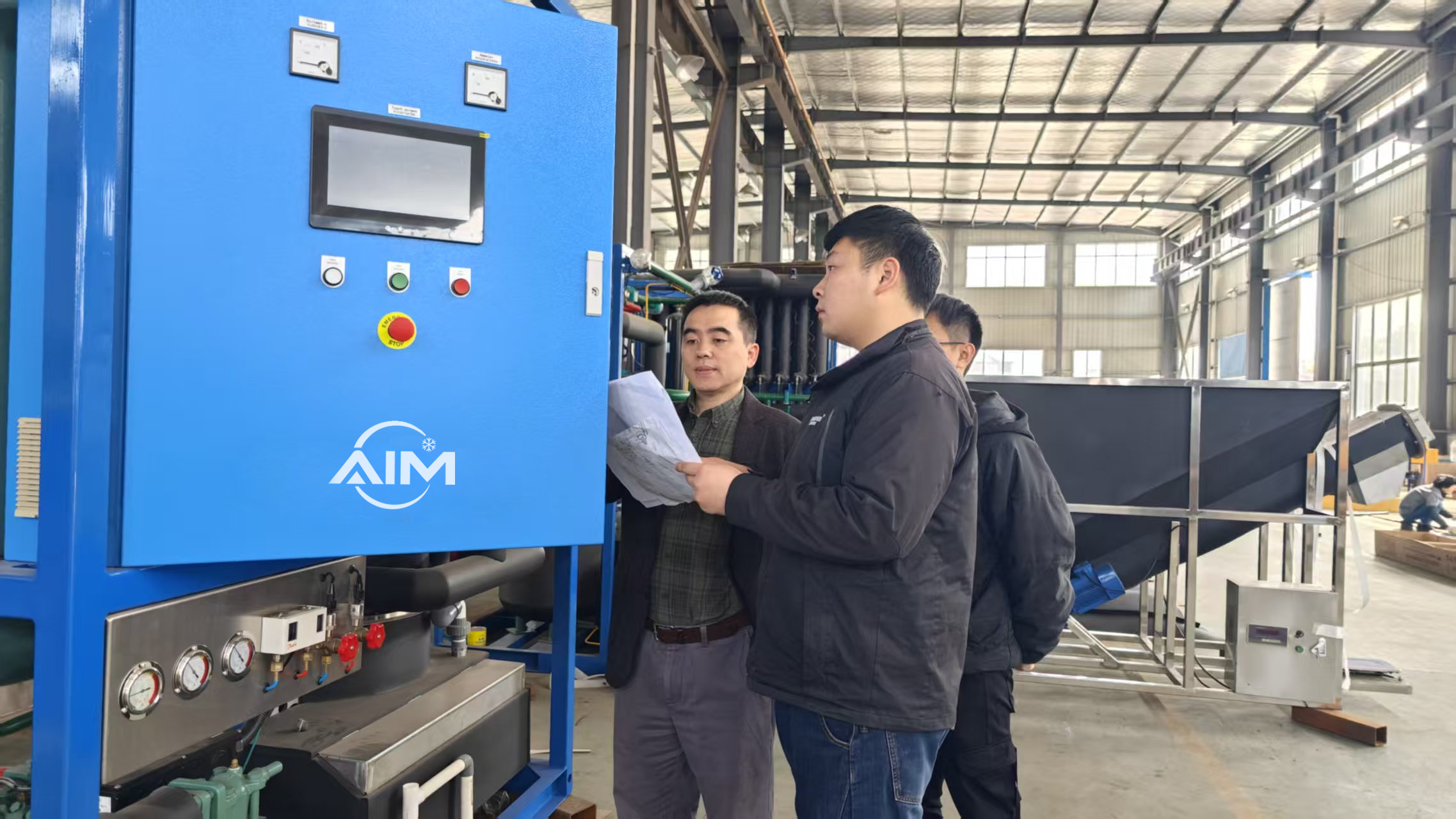
AIM Direct Cooling Block Ice Machine
Sanitary, Highly Efficient, and Eco-Friendly Ice Making Solutions
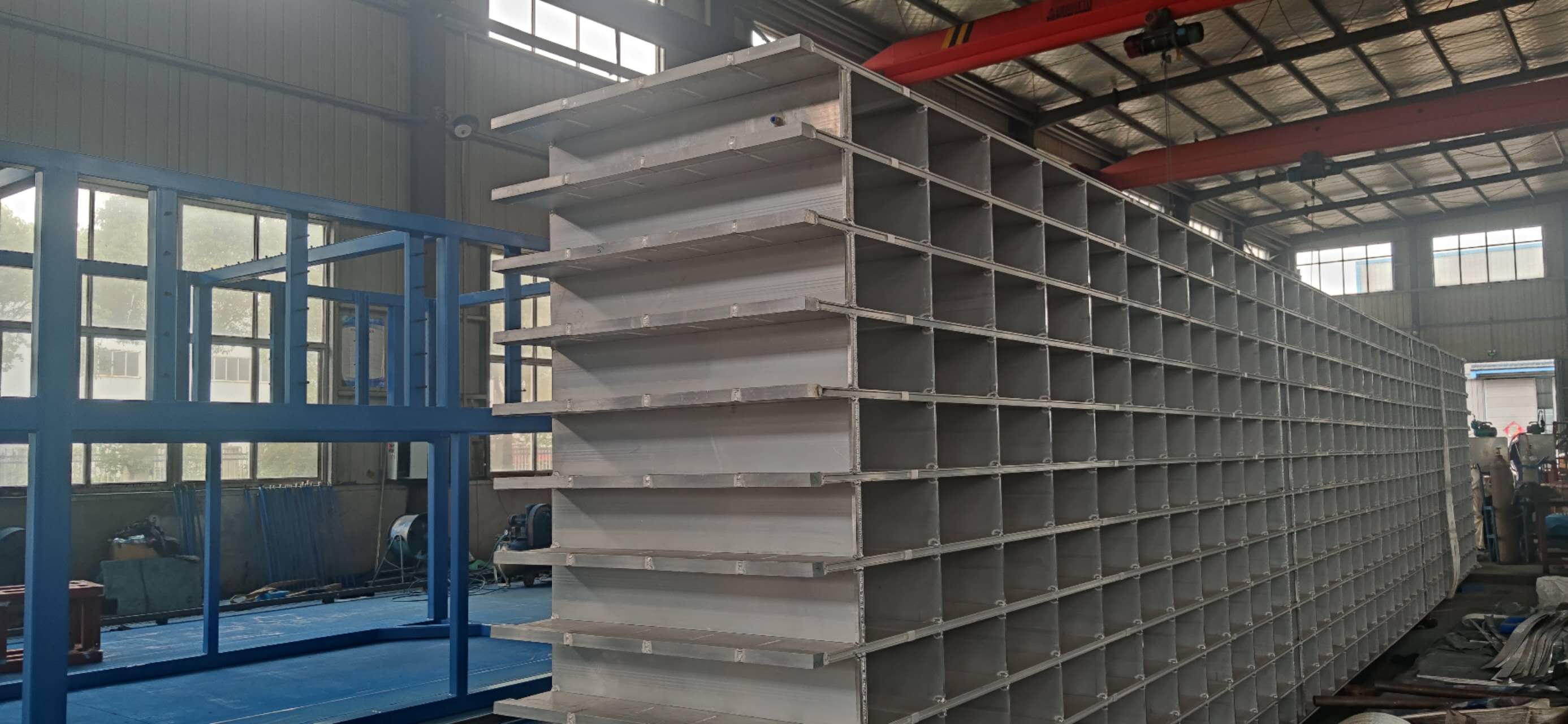
The AIM Direct Cooling Block Ice Machine adopts advanced direct refrigeration technology, eliminating the need for salt brine and reducing contamination risks. Refrigerant evaporates directly inside the aluminum evaporator plates to freeze water into ice. This direct heat-transfer process delivers clean, dense blocks while reducing the handling and maintenance associated with a brine tank.
With a brine-free freezing path, the system is well suited to ice factories, seafood distribution, food processing and other projects where hygiene, operating efficiency and reliable block quality are important.
Key Advantages
- Food-Grade Hygiene: A 100% brine-free design produces pure, sanitary ice suitable for human consumption and food processing.
- Energy Saving: Direct heat exchange shortens the heat-transfer path and can improve freezing efficiency when the system is matched to the site load.
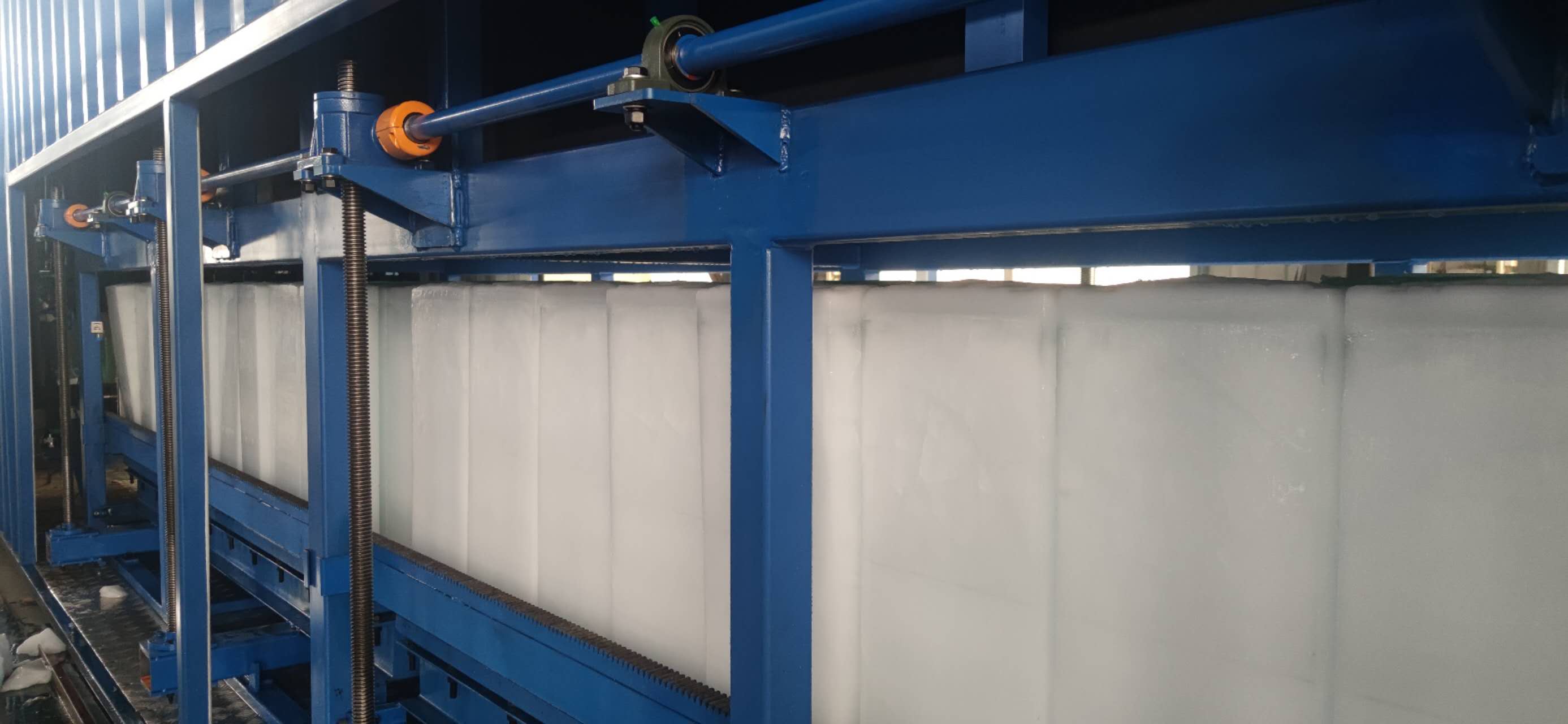
- Superior Ice Quality: The process produces hard, high-density blocks with slower melt behavior for storage, transport and commercial distribution.
- Flexible Capacity: Daily production ranges from 1 ton to 50 tons, with customizable ice block weights from 5 kg to 50 kg, subject to project configuration.
Subcategories and Models
AB-1T-DA
AB-1T-DA is positioned for single-room demand, pilot production and first-step commercial use, producing direct-cooled block ice for cleaner harvest and modular plant layouts.
Confirm plate layout, block dimension and handling method for direct harvest.
AB-2T-DA
Choose AB-2T-DA when the project calls for small daily sales where one extra production buffer matters and a practical direct-cooled block ice for cleaner harvest and modular plant layouts path.
Confirm plate layout, block dimension and handling method for direct harvest.
AB-3T-DA
AB-3T-DA gives buyers a 3-ton daily option for compact shops that need steadier output than a starter unit with room for future workflow planning.
Confirm plate layout, block dimension and handling method for direct harvest.
AB-5T-DW
AB-5T-DW suits entry commercial projects balancing output, footprint and budget, especially when buyers are comparing site space, utilities and direct-cooled block ice for cleaner harvest and modular plant layouts.
Confirm plate layout, block dimension and handling method for direct harvest.
AB-10T-DW
AB-10T-DW gives buyers a 10-ton daily option for regional supply with several delivery or processing batches per day with room for future workflow planning.
Confirm plate layout, block dimension and handling method for direct harvest.
AB-15T-DE
AB-15T-DE is positioned for two-shift operation where output stability becomes more important, producing direct-cooled block ice for cleaner harvest and modular plant layouts.
Confirm plate layout, block dimension and handling method for direct harvest.
AB-20T-DE
For industrial cooling rooms, ports or batching work with a fixed daily target, AB-20T-DE provides a capacity step that can be matched with storage or delivery equipment.
Plan plate quantity, harvest timing, block transfer and storage before confirming compressor size.
AB-25T-DE
Use AB-25T-DE for larger factories that feed several use points from one equipment room; it fits projects where direct-cooled block ice for cleaner harvest and modular plant layouts is part of the operating plan.
Plan plate quantity, harvest timing, block transfer and storage before confirming compressor size.
AB-30T-DE
Choose AB-30T-DE when the project calls for bulk dispatch sites that need storage and delivery equipment planned early and a practical direct-cooled block ice for cleaner harvest and modular plant layouts path.
Plan plate quantity, harvest timing, block transfer and storage before confirming compressor size.
Direct Cooling Tech models at a glance.
Nominal capacity and cooling route are shown for first-stage comparison. Final output depends on ambient temperature, inlet water temperature, voltage, operating hours and the complete site workflow.
| Model | Nominal capacity | Cooling route | Typical project fit | Details |
|---|---|---|---|---|
| AB-1T-DA | 1 ton/day | Direct / air-cooled | Local fishery or startup supply | View model |
| AB-2T-DA | 2 ton/day | Direct / air-cooled | Local fishery or startup supply | View model |
| AB-3T-DA | 3 ton/day | Direct / air-cooled | Local fishery or startup supply | View model |
| AB-5T-DW | 5 ton/day | Direct / water-cooled | Fishery and regional ice distribution | View model |
| AB-10T-DW | 10 ton/day | Direct / water-cooled | Fishery and regional ice distribution | View model |
| AB-15T-DE | 15 ton/day | Direct / evaporative-cooled | Fishery and regional ice distribution | View model |
| AB-20T-DE | 20 ton/day | Direct / evaporative-cooled | Fishery and regional ice distribution | View model |
| AB-25T-DE | 25 ton/day | Direct / evaporative-cooled | Fishery and regional ice distribution | View model |
| AB-30T-DE | 30 ton/day | Direct / evaporative-cooled | Fishery and regional ice distribution | View model |
Technical questions buyers ask before choosing Direct Cooling Tech.
These points help overseas buyers compare capacity, condenser type, project data and equipment scope before requesting a quotation from AIM Refrigeration.
What is the difference between brine block ice and direct cooling block ice?
Brine systems are often lower in initial cost and familiar for traditional block ice plants. Direct cooling systems avoid brine contact, can reduce manual handling and are often selected for cleaner operation and easier ice harvest.
How long does it take to freeze one batch of block ice?
Freezing time depends on block weight, water temperature, evaporating temperature, condenser performance and ambient climate. A technical quotation should be based on the required block size and daily production schedule.
Which condenser type is best for tropical block ice projects?
Water-cooled or evaporative-cooled condensers are often reviewed for hot climates when water supply and maintenance conditions allow. Air-cooled systems may be preferred where water is limited.