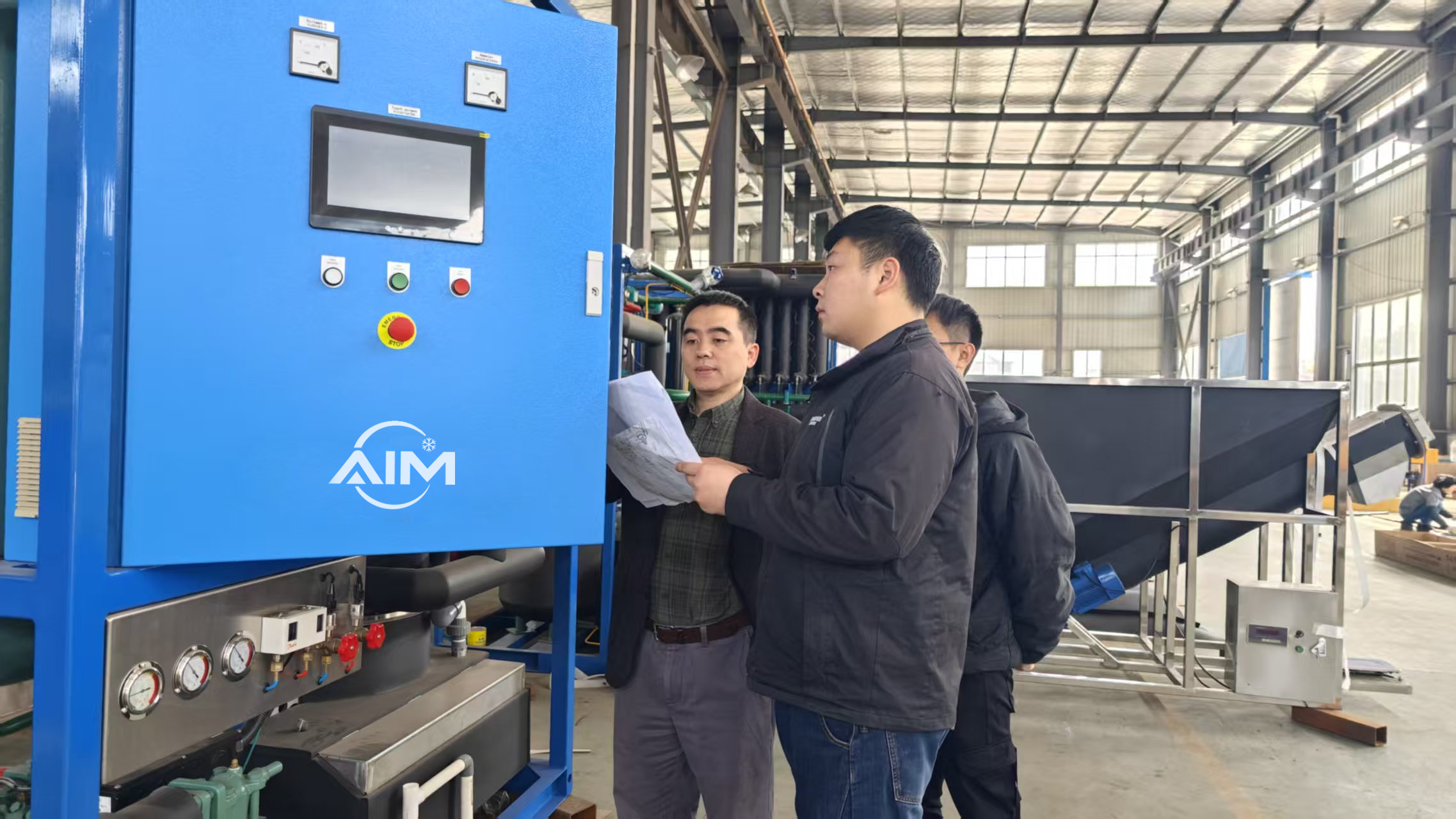
Plate ice machine for produce packing is the specific buyer question addressed here. A plate ice machine for produce packing should be planned as part of the handling route, not as an isolated ice maker. AIM describes plate ice as thick, dry ice pieces suited to rapid cooling, storage stability and industrial handling. That makes the buyer’s first question practical: where will the ice be made, stored, crushed if required, and delivered before it reaches the packing activity? A clear answer gives a supplier the information needed to review the cooling method and equipment scope.
Start with the packing workflow
Map the product path from receiving through packing and dispatch. Identify the point where ice is added or used for cooling, the people or equipment that move it, and the route that keeps ice separate from packaging traffic. This avoids requesting a machine capacity before knowing whether storage, crushing or delivery is the real constraint.
Define the cooling job
State whether plate ice will cool product directly, support a chilled handling area, or be held for a later shift. AIM notes that plate ice has a large contact area with slower melt than very fine ice. The application, preferred ice thickness and required handling method should therefore be described in the inquiry rather than assumed.
Record the operating pattern
List the daily production pattern, peak packing periods, expected storage interval and any times when delivery must be uninterrupted. Do not substitute a daily headline number for this sequence. The supplier needs to understand when ice is needed and how it will move through the site.
Plan storage before selecting delivery equipment
Storage is not a generic add-on. Confirm where ice will be held after harvest, how it will be loaded into storage, how operators will access it, and how melt water will be managed within the site’s own process design. If crushing is needed, describe the target ice form at the packing point and the reason for it. AIM specifically asks buyers to confirm ice thickness, crushing requirement and delivery method with the plant workflow.
Keep the proposed route simple and inspectable. A buyer should be able to follow ice from the outlet of the machine to the point of use without crossing an unsafe or congested path. Mark any existing conveyor, bin, cart, hopper or manual handling step that the new scope must connect with.
Confirm site conditions and utilities
AIM’s plate ice quotation guidance asks for capacity, application, storage method, voltage, ambient temperature and water condition. Supply those items as project facts, with photographs or drawings where useful, rather than asking a supplier to infer them from a short product name. The installation country and local site climate also belong in the brief because the equipment configuration is reviewed against project conditions.
Check where service access, water connection, drainage, electrical connection and delivery equipment can be located. This is planning information, not a promise that every project needs the same arrangement. The final equipment layout should follow the site review.
Coordinate the plate ice machine with related equipment
Use the AIM plate ice machine page to discuss the product path and the ice storage options when the project includes a holding stage. A separate conversation is needed when ice production must connect to a cold room, packing line or other refrigeration equipment. The quotation should identify each interface, who supplies it, and what information must be confirmed before installation.
Do not turn a model table or a generic layout into a final site specification. AIM states that its technical team reviews cooling method, equipment scope and key quotation data before recommending a practical configuration. Keep open items visible so they can be resolved during that review.
Quotation checklist
- Product and packing application
- Required ice use, daily pattern and peak periods
- Preferred ice thickness and whether crushing is required
- Storage method, delivery route and point of use
- Available voltage, water condition and ambient site conditions
- Installation country, layout drawing and access restrictions
- Existing equipment that must connect with the ice system
Send the completed brief through AIM’s contact page with the site information. A focused quotation can then address the actual workflow instead of treating production, storage and delivery as unrelated purchases.
Decision to make before requesting a quote
The key decision is the handling route: make, hold, crush when needed, and deliver. Once that route is defined, a buyer can ask AIM to review capacity and configuration against the application, site climate, water condition and utilities. This is more useful than choosing equipment from a name alone and leaves room for the final design to reflect the real packing operation.
Project review before release
Before issuing a request for plate ice machine, hold a short review with the people who own production, storage, crushing and delivery handoffs. Ask each person to confirm the facts within their responsibility rather than accepting a general approval. Operations can confirm the working sequence and peak periods; the site team can confirm access, utilities and layout; maintenance can identify service limitations; and the project owner can define which interfaces are included in the equipment scope. This review turns a product inquiry into a usable project brief.
Separate facts from assumptions
Keep a two-column record. In the first column, list confirmed information such as application, schedule, site location, available utilities, drawing references and the responsible contact. In the second, list information that requires supplier review. This may include final configuration, connection details, controls coordination or the exact boundary between supplied equipment and site work. AIM product pages identify the information needed for selection, but the final recommendation should follow a review of the real project conditions.
Issue one controlled quotation brief
Send one current drawing, one operating summary and one scope list rather than several inconsistent messages. Identify revisions and open decisions. State the installation country, the operating environment and the planned project timing only where those facts are known; do not substitute estimates for engineering data. Include photographs when they clarify access or existing equipment, while keeping private customer information out of the package. A focused brief helps AIM ask targeted follow-up questions and makes proposals easier to compare.
Finally, preserve the decision record after the quotation arrives. Check that the proposed scope addresses the application, the site interfaces and the operating pattern described in the request. Where an item is excluded or depends on another contractor, assign an owner and a next action. That discipline does not guarantee a particular result; it gives the project team a transparent basis to evaluate equipment recommendations and proceed with the technical review.
Use this final check to make the quotation record complete. Confirm the latest drawing, the named contacts, the source of each operating fact and the open decisions that still require technical review. A clear record helps the buyer, AIM and related contractors evaluate the same project assumptions.
Technical questions buyers ask before choosing Plate Ice Machine: Planning Storage and Crushing for Produce Packing.
These points help overseas buyers compare capacity, condenser type, project data and equipment scope before requesting a quotation from AIM Refrigeration.
What is plate ice used for?
Plate ice is used for seafood cooling, food processing, ice storage, concrete support cooling, chemical plants, mines and other industrial cooling projects where stronger ice pieces and storage stability are needed.
How thick is plate ice?
Plate ice is commonly selected around 10 to 15 mm thickness, and the thickness can be adjusted by ice-making time and project requirements.
What data is needed before selecting an AP plate ice machine?
AIM reviews daily ice demand, application, voltage, ambient temperature, inlet water temperature, ice thickness, condenser route, storage plan and delivery method before proposing an AP model.