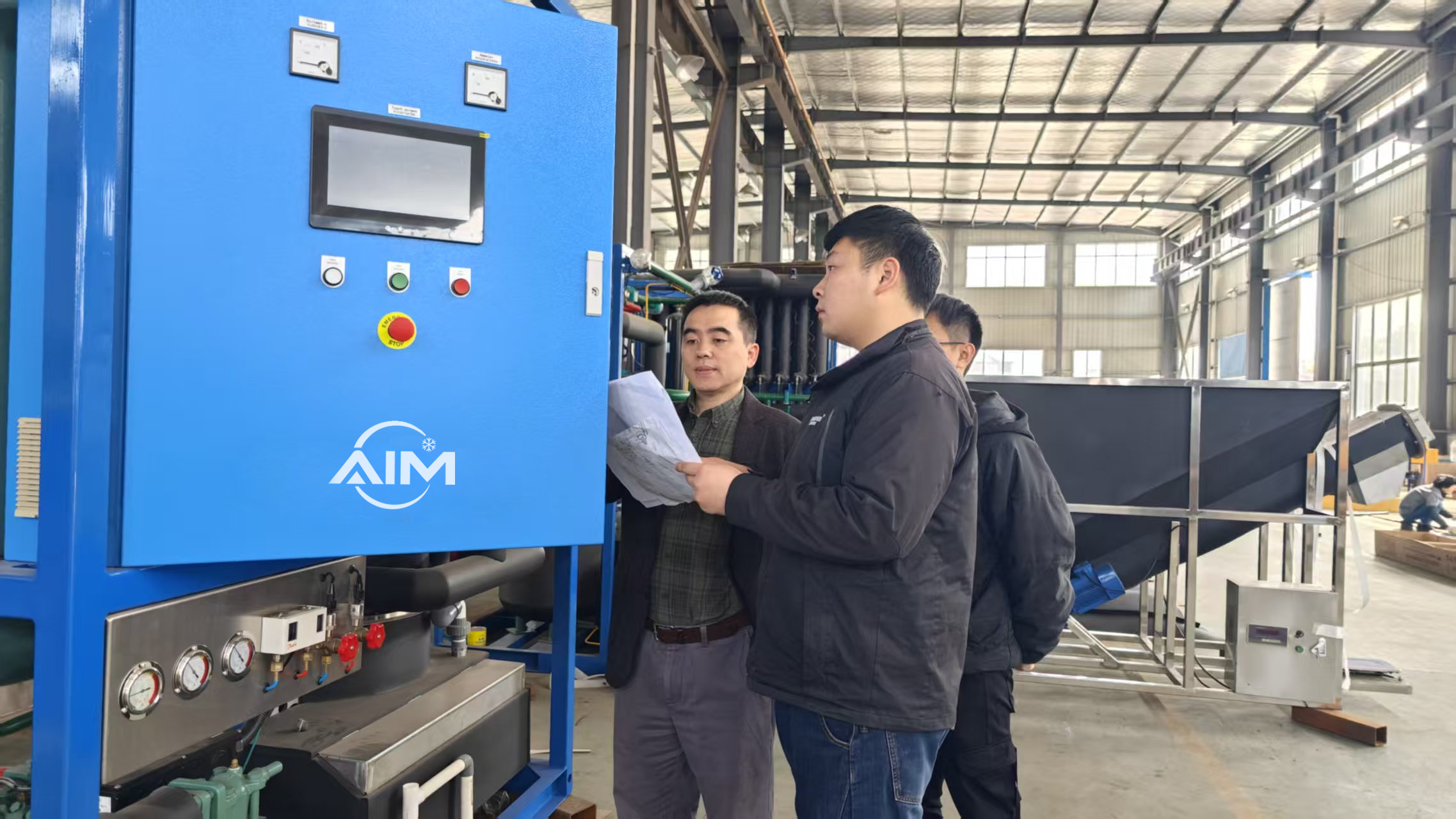
AIM describes concrete cooling systems that can combine chilled water, flake ice generation, insulated ice storage, ice delivery, weighing, and batching interfaces. That makes the ice-dosing handoff a central buying question. A project brief should show how the batching plant presently receives material and who owns each control, mechanical, and operational boundary before a supplier is asked to define a system.
This guide addresses one buying question: what should a buyer provide before asking AIM Refrigeration to assess a concrete cooling system ice dosing interface? It is a planning aid, not a promise about output, utility consumption, temperatures, delivery dates, or final engineering. The relevant concrete cooling system page establishes the product category; the proposal must establish the project-specific arrangement.
Start with the operating decision
Describe the batching sequence, recipe approval process, material handoff point, production shifts, and periods when pours create peak coordination demands. Identify the existing plant controls, weighing arrangement, water addition point, ice receiving point, and the person authorized to change a batch sequence. State which observations come from plant records and which still require confirmation; no assumed mix or temperature values should be used as final selection data.
Record what is known, the source of each input, and the decision still open. A measured observation, an operating estimate, and a target set by a project team should not be treated as the same thing. That small discipline gives AIM a usable brief and lets competing quotations be checked against the same basis.
Define the requested supply boundary
Separate equipment from connected work
Request a scope that identifies flake ice production where applicable, storage, delivery, conveying or transfer, weighing, discharge, controls signals, and connection to the batching plant. Separate AIM’s proposed supply from owner-provided civil works, utilities, plant modifications, instrumentation, and commissioning coordination. Make the interface point visible on a drawing and in the quotation review.
Ask each supplier to identify equipment supplied, connection points, assumptions, exclusions, documents, start-up participation, and work that remains with the owner or contractor. A line item is not automatically a complete operating system. Clear boundaries reduce the chance that a necessary interface is discovered only after equipment has arrived on site.
Identify the people who use the system
Include the operator, maintenance, cleaning, production, facilities, and project contacts in the inquiry. Describe access restrictions, normal shifts, cleaning windows, control-room responsibilities, and the route for reporting a change. This is not an attempt to prescribe a machine; it is information that helps the technical discussion reflect the actual workplace.
Map the site and its interfaces
Provide the batching plant layout, aggregate and mixer routes, proposed equipment positions, access road or crane limitations, utility locations, drainage, and controls-room relationship. Include available process diagrams and the site rules for work near live production equipment. The information should allow review of physical routing and responsibility, not imply unverified system performance.
Current drawings are more useful than a verbal description. Mark equipment space, service clearances, lifting or delivery constraints, doors, floor levels, drains, ventilation, water and electrical connection locations, and interfaces with existing systems. Where an item has not been confirmed, label it as pending rather than filling the gap with a guessed value.
Build a quotation-ready evidence pack
Send the same concise project pack to every bidder. Include the application description, operating sequence, demand or batch pattern, layout, available utilities, country and local electrical information, existing-equipment interfaces, and anticipated decision date. Attach photographs only where they clarify an access route or connection point, and remove private or customer-sensitive information before sharing.
AIM’s product page can be used alongside the project pack to frame the discussion, while the AIM contact page is the appropriate route for a project-specific request. A responsible proposal should state what it relies on and identify data that must be verified before final selection.
Keep assumptions under change control
Early equipment discussions often begin before drawings, utility records, and operating procedures are final. That is normal, but an assumption needs an owner and a confirmation date. Maintain a short register that states the assumption, the information needed to verify it, who will provide that information, and the effect if it changes. Examples include the planned equipment position, an available connection point, an access route, or the sequence between two existing operations.
Issue the register with the latest drawing and request that the quotation identify which of its scope decisions depend on each open item. Do not convert a provisional statement into a technical commitment merely because it has appeared in an email. When a condition changes, circulate the revised information to the project team and ask for the proposed scope to be reviewed. This makes the buying process easier to audit and protects the practical operating plan from silent changes.
Quotation checklist
- Batching sequence and authorized recipe-control process
- Existing weighing, water-addition, and plant-control interfaces
- Proposed ice handoff and discharge point
- Layout, access, drainage, utility, and civil-work information
- Supplier, owner, and plant-contractor responsibility split
- Commissioning coordination and change-control procedure
Review proposals before release
Assess proposals by tracing one approved batch from the planned ice source to the plant handoff. Confirm how storage, delivery, weighing, controls, interlocks, utilities, installation, and start-up support are assigned. Resolve a gap in writing before any party assumes it belongs to another contractor.
Before an order is released, compare each response against the same written brief rather than against an assumed standard configuration. Confirm final drawings, utility responsibilities, equipment and access boundaries, documentation, commissioning coordination, and any unresolved interfaces in writing. If the operating plan changes, update the brief and ask for the effect on the proposed scope before treating it as final.
Technical questions buyers ask before choosing Concrete Cooling System: Ice Dosing Interface Checklist.
These points help overseas buyers compare capacity, condenser type, project data and equipment scope before requesting a quotation from AIM Refrigeration.
What equipment is used in a concrete cooling system?
A complete concrete cooling system may include water chillers, flake ice machines, automatic ice storage, delivery conveyors, screw delivery, weighing hoppers and mixer control integration.
Why use ice in concrete cooling?
Ice absorbs heat during melting, so it can reduce concrete mix temperature more effectively than chilled water alone when the project faces hot ambient conditions or strict placing temperature limits.
What project data is needed before quotation?
AIM reviews concrete output, target mix temperature, aggregate temperature, cement temperature, water temperature, ambient climate, batching cycle and site layout before proposing equipment.