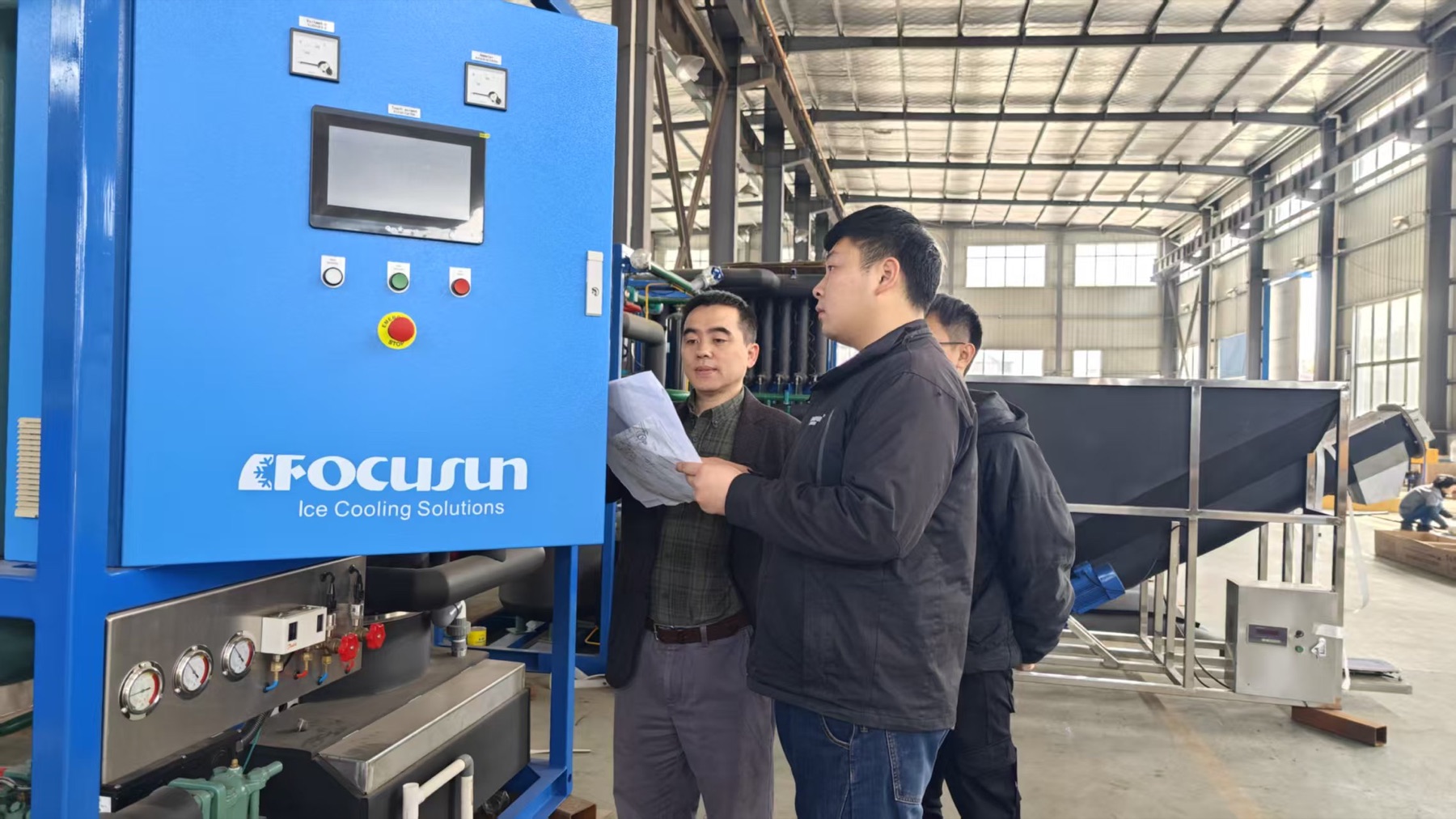
Tube Ice Machine Capacity: How Ambient Temperature and Inlet Water Temperature Affect Ice Production
Learn how ambient temperature and inlet water temperature affect tube ice machine capacity, and how to choose the right industrial ice machine for real operating conditions.
Tube ice machine capacity is not a fixed number in every factory, port or beverage ice plant. The daily output is affected by ambient temperature, inlet water temperature, condenser design, water quality and how many hours the machine can run under stable conditions. This guide explains how temperature changes affect tube ice production and how buyers can choose the right machine capacity before ordering.
Why tube ice machine capacity changes with temperature
When a supplier says a tube ice machine is rated at 5 tons, 10 tons or 30 tons per day, that capacity is normally measured under a specific test condition. The two most important temperature conditions are ambient temperature and inlet water temperature.
A tube ice machine has to remove heat from water until it freezes inside the vertical evaporator tubes. If the room or outdoor air is hotter, the refrigeration system must reject more heat through the condenser. If the incoming water is warmer, the machine must remove more heat before ice can form. Both conditions increase the load on the refrigeration system and can reduce the actual daily ice output.
Ambient temperature: how the installation environment affects production
Ambient temperature means the air temperature around the refrigeration unit and condenser. For an air-cooled tube ice machine, this is especially important because the condenser depends on surrounding air to remove heat. When ambient temperature rises, condensing pressure usually rises, compressor workload increases, and ice-making cycle efficiency can drop.
For example, a machine selected only by nominal daily capacity may perform well in a mild workshop, but produce less ice in a tropical country, a poorly ventilated plant room, or a container installation exposed to afternoon sun. Buyers should always tell the supplier the highest expected summer ambient temperature, not only the average yearly temperature.
Inlet water temperature: why warm water reduces ice output
Inlet water temperature is the temperature of water entering the ice-making system. Tube ice machines using colder feed water can freeze water faster. Machines using warm feed water need more refrigeration capacity and longer freezing time.
This is a common issue in hot climates, rooftop water tanks, factories with long outdoor water pipes, or sites where process water is already warm. If the water supply reaches 30 deg C or above, the buyer should discuss capacity correction, pre-cooling options, or a larger model with the manufacturer.
Typical temperature scenarios buyers should consider
| Site condition | What it means for tube ice output | Buying suggestion |
|---|---|---|
| Mild workshop, stable ventilation | Actual output is closer to rated capacity when water temperature is also moderate. | Select by daily ice demand plus a practical safety margin. |
| Hot country or outdoor condenser | Higher condensing temperature can reduce efficiency and daily production. | Share peak summer temperature and consider water-cooled or evaporative condenser design. |
| Warm inlet water | The refrigeration system must remove more heat before freezing starts. | Ask for corrected capacity based on real inlet water temperature. |
| Long daily operation with unstable utilities | Voltage, water pressure and ventilation problems can reduce 24-hour output. | Plan buffer ice storage and choose a model with service margin. |
How to choose the right tube ice machine capacity
The best way to choose a tube ice machine is to work backward from real daily demand, not only from the model name. A buyer should calculate how much ice is required during the busiest day, how many hours the machine can run, how much storage is available, and whether production must continue during high-temperature seasons.
For packaged ice factories, demand often rises in summer, exactly when the machine may face higher ambient temperature and warmer inlet water. For beverage distributors, seafood markets and food processing plants, the machine must support peak delivery periods without running too close to its limit.
A practical selection formula
Use this simple planning method before requesting a quotation:
- Step 1: Confirm daily ice demand. Estimate the highest daily sales or usage volume, not the average month.
- Step 2: Confirm real site temperatures. Provide peak ambient temperature and summer inlet water temperature.
- Step 3: Add a capacity margin. If the site is hot, water is warm, or demand changes seasonally, avoid selecting a machine that is exactly equal to daily demand.
- Step 4: Match ice storage. A larger machine without enough ice storage can still create delivery pressure during peak hours.
- Step 5: Compare condenser options. Air-cooled, water-cooled and evaporative systems have different requirements for ventilation, water use and installation space.
Air-cooled or water-cooled tube ice machine?
An air-cooled tube ice machine can be easier to install because it does not require condenser water circulation. However, it depends heavily on ventilation and ambient temperature. If the machine room is hot or airflow is restricted, output and efficiency may suffer.
A water-cooled or evaporative condenser system can be more suitable for larger tube ice plants or hot regions, but it requires water quality control, regular maintenance and suitable installation planning. The right choice depends on climate, water availability, local utility cost and maintenance ability.
Questions to ask before buying a tube ice machine
Before choosing a model, ask the supplier these questions:
- What ambient temperature and inlet water temperature are used for the rated capacity?
- What is the estimated output at my local peak summer condition?
- Is the condenser air-cooled, water-cooled or evaporative?
- How much ice storage is recommended for my daily operation?
- What power supply, water pressure and room ventilation are required?
- Can the system be expanded if my ice business grows?
Common mistake: buying only by the tons-per-day label
The model capacity label is useful for comparison, but it is not enough for final selection. A 10-ton tube ice machine installed in a cool, ventilated plant with moderate feed water is not operating under the same condition as a 10-ton machine installed in a hot coastal city with warm inlet water and limited ventilation.
This is why professional suppliers ask for site information before giving a serious recommendation. The goal is not only to sell a bigger machine. The goal is to make sure the buyer receives enough tube ice during the most demanding season.
Recommended information to send for quotation
To receive a more accurate tube ice machine proposal, prepare the following details:
- Required ice production per day
- Country and city of installation
- Peak ambient temperature in summer
- Estimated inlet water temperature
- Power supply voltage and frequency
- Tube ice size requirement
- Application: packaged ice, beverage cooling, seafood, food processing or other use
- Need for ice storage, weighing, packing or delivery system
Conclusion: choose capacity for the real operating environment
Tube ice machine capacity is closely related to ambient temperature and inlet water temperature. A correct purchase decision should consider the hottest season, the warmest feed water, condenser type, operating hours, storage capacity and future demand growth.
For buyers comparing industrial tube ice machines, AIM Refrigeration can help review the operating condition and recommend a more suitable production line, from standalone equipment to complete ice making, storage and packing systems. View the tube ice machine product page or send your project details through the project inquiry form.
FAQ
Does higher ambient temperature reduce tube ice machine capacity?
Yes. Higher ambient temperature can increase condenser pressure and reduce refrigeration efficiency, especially for air-cooled systems. The actual impact depends on condenser design, ventilation and machine configuration.
Does inlet water temperature affect tube ice production?
Yes. Warmer inlet water requires more refrigeration work before ice can form, so freezing time may become longer and daily output may decrease.
Should I choose a larger tube ice machine for a hot country?
Often yes, or at least the capacity should be corrected according to local summer conditions. The best choice may also include better ventilation, a different condenser type or water pre-cooling.
What information is most important for a tube ice machine quotation?
Daily ice demand, application, ambient temperature, inlet water temperature, power supply, installation location and storage requirement are the most important details for an accurate quotation.